

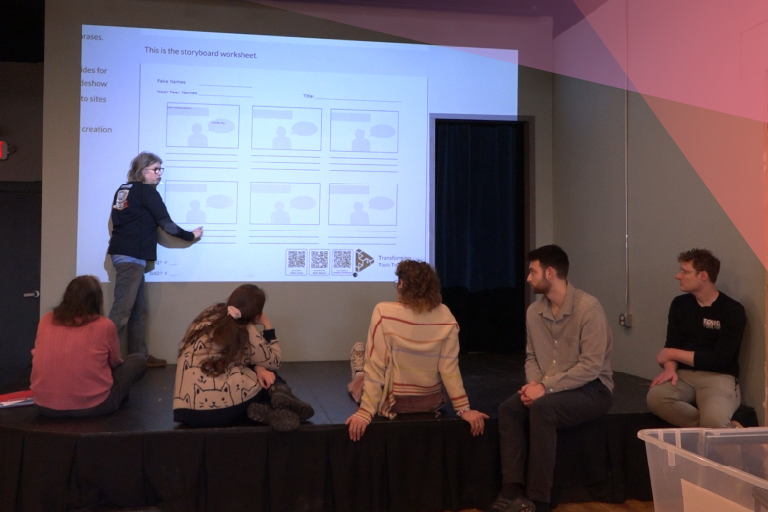
As April marks Autism Awareness Month, faculty in the Department of Media and Information (M&I) are working to improve how mental health is assessed among autistic adolescents by redesigning screening tools to be more accessible, precise and inclusive.
Led by Celeste Campos-Castillo and Susan Bonner, associate professors in M&I, their project combines expertise in communication, health services and interactive design to reimagine the screening experience.
While approximately one in five adolescents ages 12–19 experiences anxiety or depression, rates may be higher among autistic youth, who are more likely to experience bullying, social isolation and household instability. However, the true prevalence remains unclear because autistic adolescents are less likely to be screened and often face barriers when completing traditional assessments.
“The reason we don’t have a precise estimate is that, compared to their nonautistic peers, autistic adolescents are less likely to be screened for anxiety and depression, and when they are, we often see more variable responses,” Campos-Castillo said. “We need a better screening experience to help autistic adolescents get the supports they need.”
Rethinking how screening tools communicate
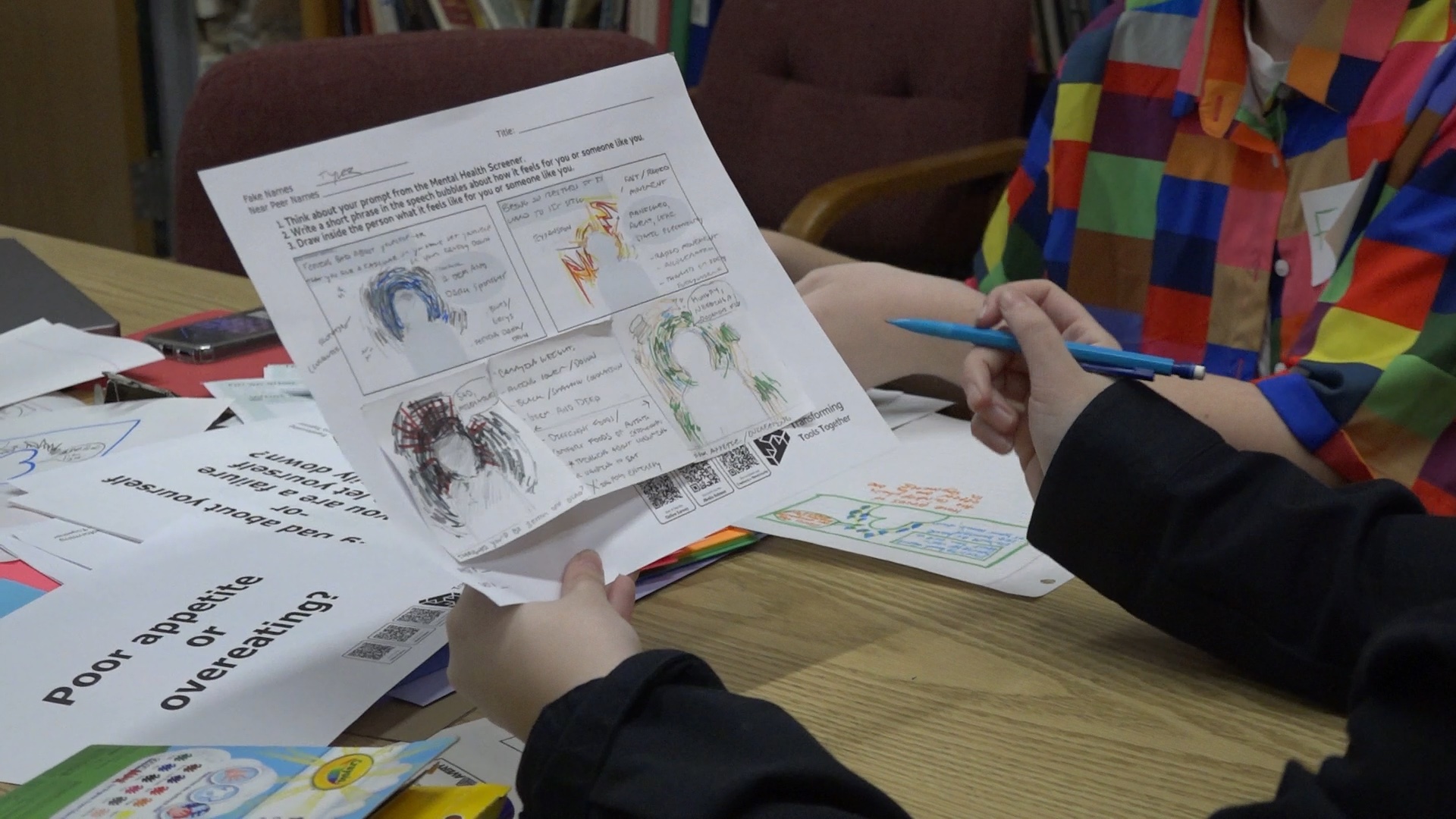
Commonly used mental health screeners, such as the Generalized Anxiety Disorder scale and Patient Health Questionnaire, often rely on vague or complex language that can be difficult to interpret. Questions may include imprecise phrasing, combine multiple internal states or use response options that lack clarity.
Campos-Castillo and Bonner are applying principles of universal design to create a more accessible screening experience.
The redesigned tool presents one question at a time, includes audio recordings of each prompt and separates questions that address multiple concepts. It also incorporates visual and animated elements to clarify meaning and improve response accuracy.
“Autistic adolescents prefer precise language,” Campos-Castillo said. “We’re enhancing existing screeners by providing multiple ways to communicate the information so that it is clearer and more accessible.”
Bonner and Campos-Castillo co-direct the Transforming Tools Together Lab, which focuses on using entertainment and games to transform health care.
Co-designing with autistic adolescents
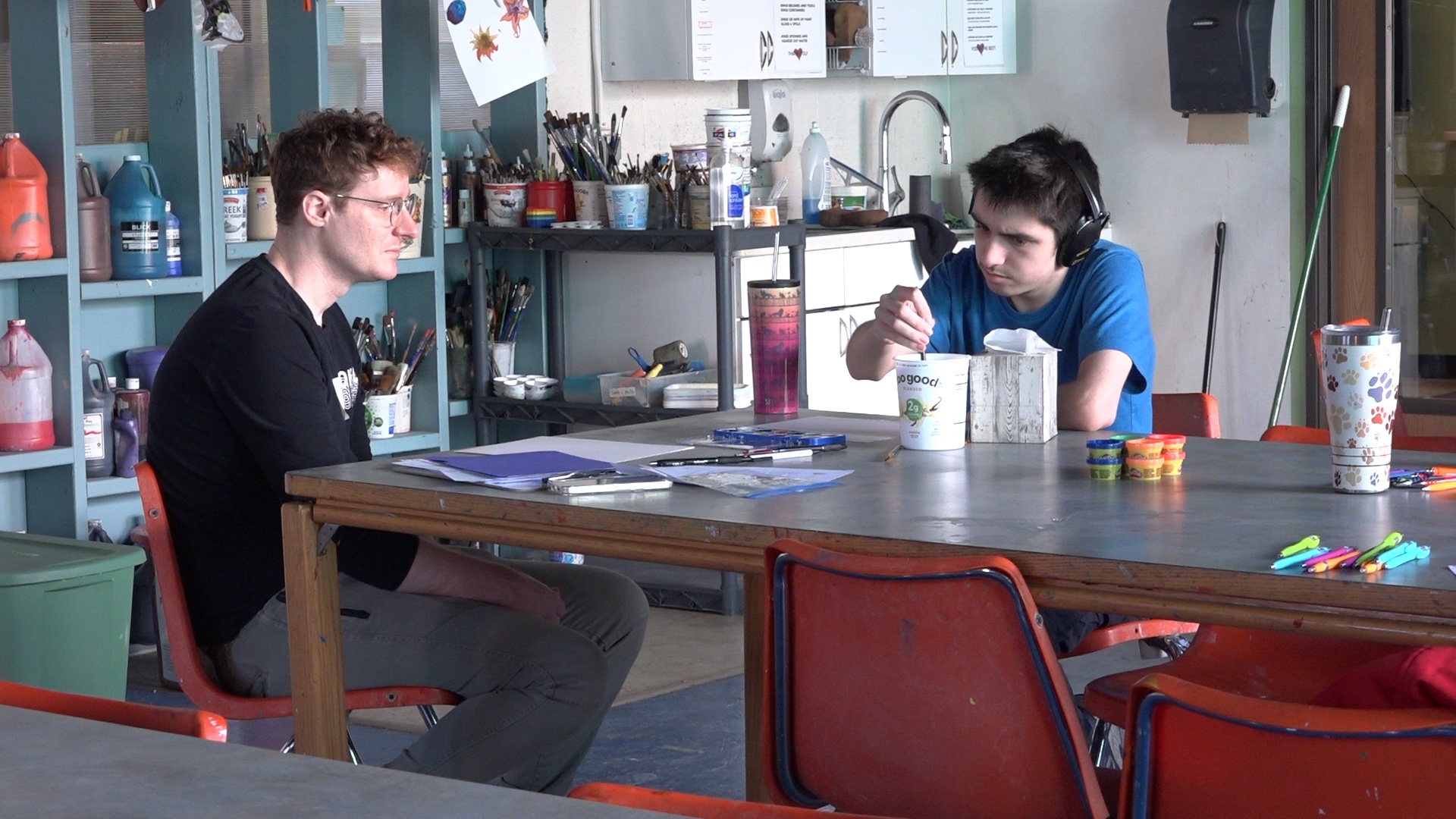
A central component of the project is its co-design approach, which involves autistic adolescents as active collaborators in shaping the tool.
Participants help develop visuals, audio and design elements that reflect their lived experiences, an approach both researchers say is critical to the project’s success.
“Thanks to their creativity, we now view the transformed tool as a way for autistic adolescents to help explain the screeners to other autistic adolescents,” Campos-Castillo said.
Hands-on learning across disciplines
The project provides experiential learning opportunities for students across MSU. Undergraduate and graduate students from six colleges are involved in all stages of the work, from research and data analysis to design and production — including some students who are autistic themselves.
Students conduct interviews, analyze findings, test user experiences and produce multimedia content documenting the project. Many also work directly with autistic adolescents to co-create elements of the screening tool.
Daniel Isobel Galisteo, an M&I student majoring in Game Design, contributes to the project as an artist, helping develop visuals and animations that support how screening questions are communicated.
During co-design sessions in Lansing, Galisteo guided autistic adolescents and student collaborators in translating screening questions into visual forms, including watercolor paintings that represented emotions, movement and lived experiences tied to anxiety and depression.
“It has given all of us a deeper understanding of what may be miscommunicated or misinterpreted in mental health screeners,” Galisteo said. “Some of the questions and response options can feel vague or confusing, and this process has helped us think about new ways to make them clearer.”
Galisteo said the experience has also been personally meaningful.
“Being able to create something that will help others with their mental health is incredibly important to me,” he said. “As someone who was diagnosed with anxiety later in life, it was frustrating not understanding what I was experiencing. This work can help others access support earlier.”
Expanding access to mental health support
Campos-Castillo and Bonner hope the project will lead to more effective and equitable mental health screening for autistic adolescents, helping ensure those who need support are accurately identified and connected to care.
“We hope this will transform the screening experience so that autistic adolescents who need support can get what they need,” Campos-Castillo said. “We also see this as a model for how the creativity of autistic adolescents can help solve problems through design.”
The project is supported by the Blue Cross Blue Shield of Michigan Foundation and several MSU programs, including the Center for Teaching and Learning Innovation, Diversity Research Network, Honors College and the Office of Research and Innovation.
This story originally appeared on the College of Communication Arts and Sciences website.
Opportunities for Partnership
The MSU Innovation Center is seeking companies and organizations interested in accessible mental health technology, inclusive health screening design, and autistic adolescent support innovations. Whether you’re exploring sponsored research, licensing opportunities, or co-developing universally designed mental health assessment tools, multimedia health communication platforms, or co-design frameworks for underserved youth populations, we’re ready to collaborate. Interested in partnering with MSU faculty on inclusive health screening research and next-generation accessible mental health assessment solutions?
Visit innovationcenter.msu.edu or contact us to start the conversation.
###
About the MSU Innovation Center
The MSU Innovation Center is Michigan State University’s hub for corporate partnerships, technology commercialization, and startup support. By integrating MSU Technologies, Business Connect, and Spartan Innovations, the Center transforms groundbreaking research into real-world impact. Each year, the Innovation Center helps launch more than 130 discoveries into patented products and startup ventures, advancing economic development and improving lives locally and globally. Through strategic collaborations with faculty, industry, and investors, the Center accelerates innovation from concept to market—empowering Spartans to lead in entrepreneurship, research translation, and public-private partnerships. Learn more at innovationcenter.msu.edu