

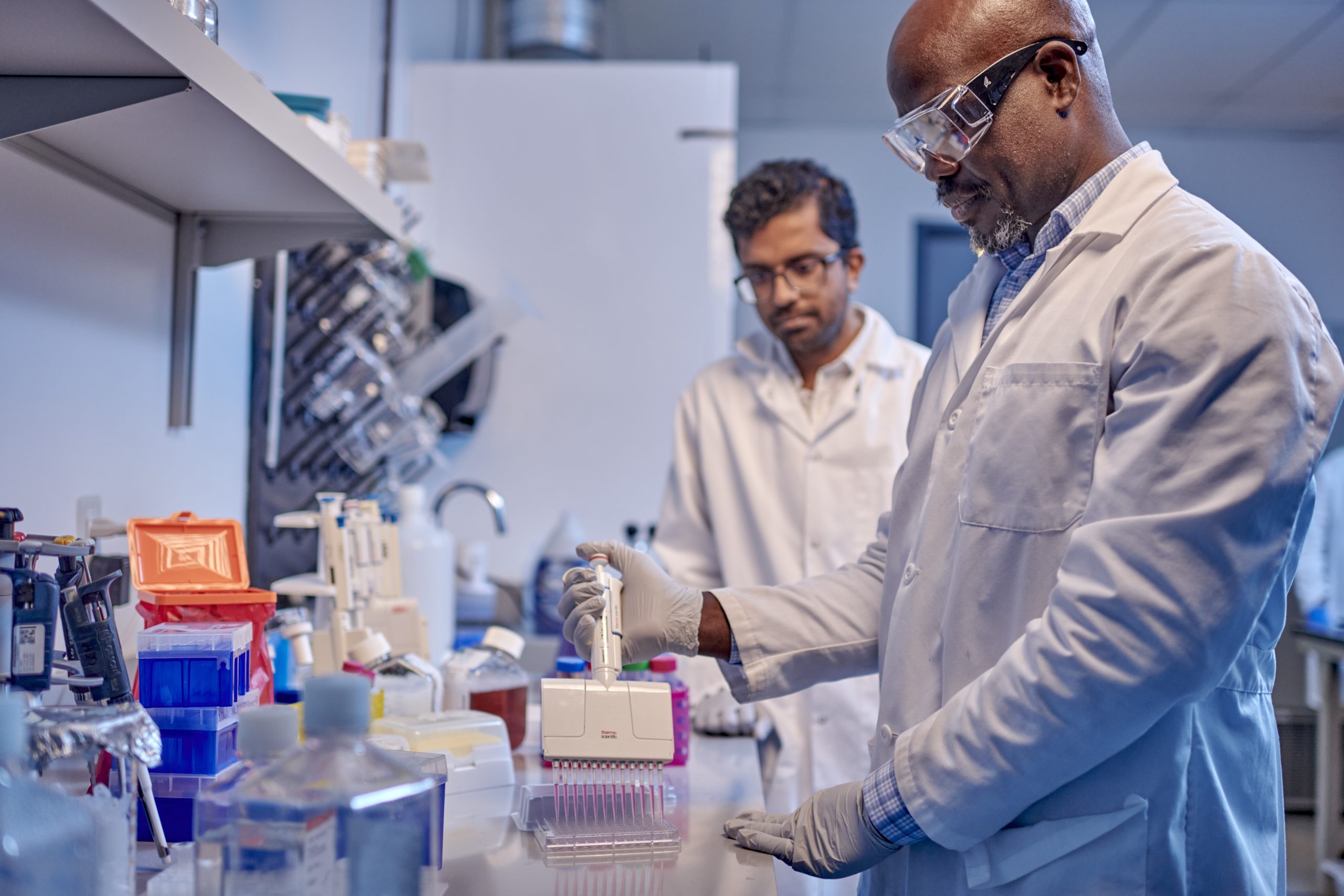
 The world faces a growing threat from antibiotic-resistant bacteria, rapidly evolving viruses, and diseases for which traditional vaccines are ineffective or impractical. Existing vaccines often require multiple doses, cold storage, and complex manufacturing barriers that limit global access.
At Michigan State University (MSU), Dr. Xuefei Huang, a professor in the Department of Biomedical Engineering and co-founder of IASO Therapeutics, is addressing these challenges head-on. Supported by a multidisciplinary team of experts in synthetic chemistry, immunology, biotechnology, glycoscience, protein engineering, and vaccine development, Dr. Huang has developed a synthetic vaccine platform that is redefining what’s possible in immunization.
By targeting bacteria that evade current treatments and enabling rapid adaptation to new viral variants, Dr. Huang’s technology offers a solution for pandemic preparedness and global health. Its stability and affordability make it especially valuable for distribution in low-resource settings, where cold chain infrastructure is limited.
Built on Dr. Huang’s innovative Q-beta technology, IASO Therapeutics envisions a world where a single vaccine dose could protect against antibiotic-resistant bacteria, pandemic viruses, and even cancer—delivered in a stable, affordable format accessible to communities everywhere.
Q-beta: Versatility, Memory, and Global Impact
The key to this breakthrough is the Q-beta carrier protein—a tiny, precisely engineered nanoparticle made up of 180 building blocks. Each building block has five sites that can be loaded with a wide variety of antigens, including those from cancer, microbes, or even opioid analogs.

Q-beta’s unique structure allows IASO to conjugate up to 900 molecules to the surface of each capsid, resulting in a very high density and precise pattern of antigens. As Dr. Huang explains, “The structure of Q-Beta is like a soccer ball measuring only 30 nanometers in size. This structure provides a suitable way for us to display the desired antigen in a densely organized manner. Q-Beta’s unique structure is one of its biggest advantages.”
This pattern and density are critical for immune activation. “This combination of pattern and density allows us to present antigen to the B cells of the immune system to elicit a much greater strength antibody production, and that translates to greater affinity, meaning how strongly the antibodies recognize and bind to the antigen of interest as well as the duration of antigen protection and the amount of the antibody that is produced,” said Robert Forgey, President and CEO of IASO Therapeutics.
“Think of Q-Beta like a highly efficient delivery vehicle—it’s excellent at carrying and displaying different types of antigens, whether they are related to cancer or infectious microbes. We conducted a direct comparison between Q-Beta and the standard carrier commonly used by others in the industry. Our results showed that Q-Beta outperforms the benchmark carrier, making it a superior platform for vaccine development. We have a better delivery vehicle,” explained Dr. Huang.
Synthetic Antigens: Stronger, Adaptable, Flexible
The Q-beta carrier is only part of IASO’s breakthrough. At the heart of the platform is a deceptively simple idea: mimic the surface of dangerous pathogens using custom-built sugar molecules, called synthetic glycans, and attach them to Q-beta. Unlike traditional vaccines, which often rely on weakened or inactivated pathogens or protein fragments, IASO’s platform uses synthetic chemistry to construct precise copies of the sugars found on the surfaces of bacteria and viruses, “tricking” the body into mounting the desired immune response.
When injected, the immune system recognizes the dense display of antigens and mounts a supercharged response, delivering long-lasting protection against threats such as MRSA, Salmonella, Vibrio cholerae, and SARS-CoV-2 variants, including Omicron. This enables efficient and cost-effective vaccine production, as well as rapid adaptation to new pathogens, similar to the impact mRNA vaccines have had on peptide and protein vaccines.
However, unlike mRNA vaccines, which require frequent boosters and cold storage, Q-beta vaccines can provide near-lifetime immunity and are shelf-stable at room temperature, eliminating the need for refrigeration—a critical advantage for global vaccine access.
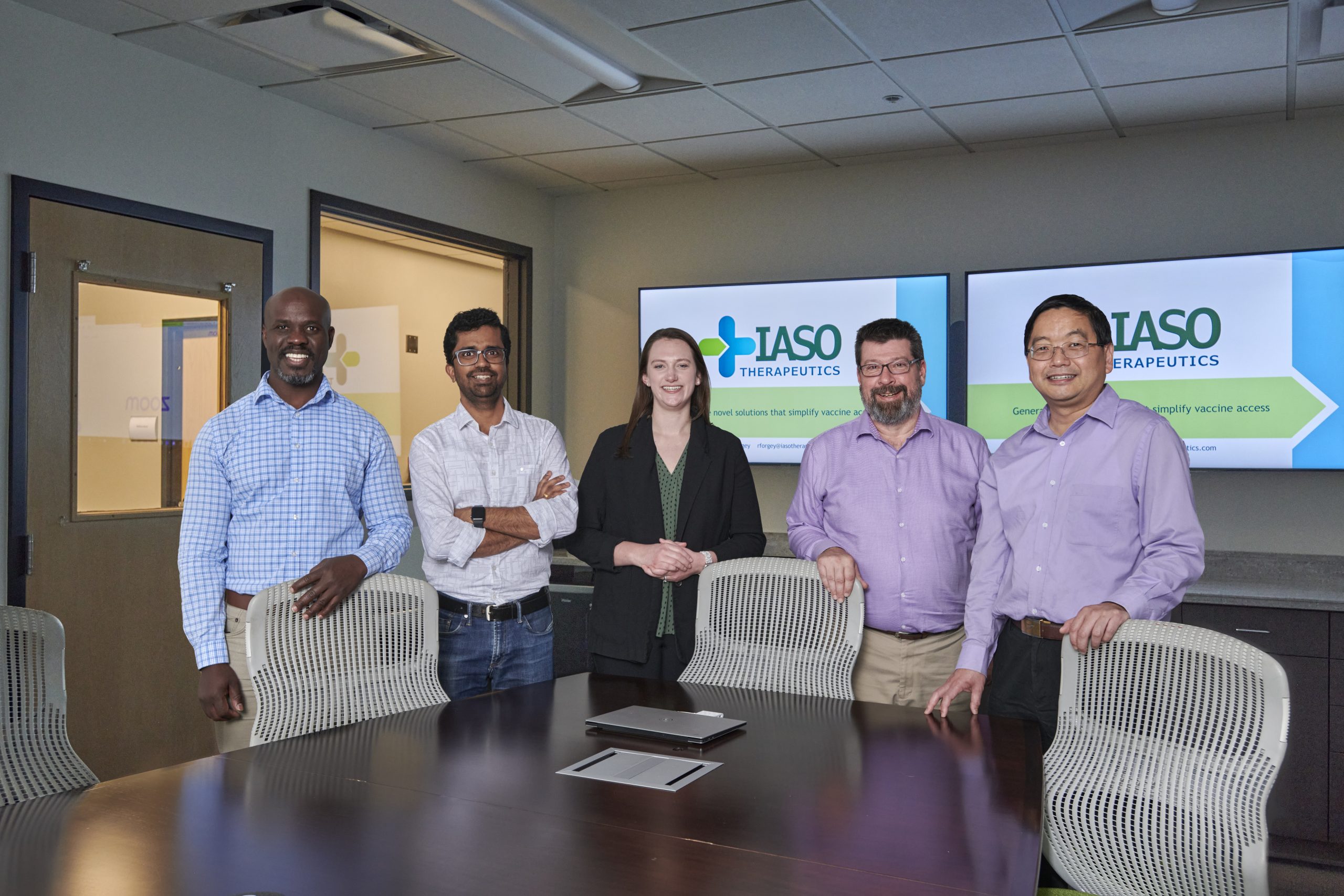
This approach has demonstrated broad-spectrum protection, with strong immunity achieved in preclinical models after just one dose. The immune response is not only robust but also durable, with B-cell and T-cell memory lasting over a year. The platform’s modularity enables the rapid development of new vaccines in response to emerging threats.
What sets IASO’s vaccine platform apart is its precise control over antigen structure, density, and presentation. Q-beta’s unique design enhances immune activation, resulting in stronger and longer-lasting protection than traditional protein-based or whole-pathogen vaccines. The platform’s capacity to deliver synthetic glycans means its modular design allows scientists to swap in new antigens as threats emerge quickly—a novel application of synthetic chemistry and nanotechnology that enables capabilities not possible with older methods.
Powering IASO’s Path from Lab to Market
IASO Therapeutics’ success is a testament to the strength and depth of the MSU innovation ecosystem. This collaborative network supports faculty inventors and startups at every stage, from discovery to commercialization and beyond.
Recognizing the potential impact of Q-Beta technology, the MSU Innovation Center took early action to protect its intellectual property, making a strategic decision to pursue international patent protection in key markets, including Canada, China, Japan, Hong Kong, and Europe.
“We need to have IP protection, intellectual rights protection in those different parts of the world. So that’s why MSU Technology decided to apply for the PCT and later convert it to multiple other countries,” said Dr. Huang.
This global approach not only increased the value of the technology but also positioned IASO for future partnerships and licensing opportunities with major pharmaceutical companies. MSUT facilitated the licensing of the technology to IASO, ensuring the startup had the exclusive rights needed to attract investment and talent.
The MSU Innovation Center also provided critical early-stage funding through translational grants, such as ADVANCE and MTRAC, to move the technology toward commercialization. These resources enabled IASO to develop its technology within the university until it was ready to launch independently.
“MSU’s support was instrumental in moving our technology from the bench to the marketplace,” said Dr. Herbert Kavunja, Chief Scientist of IASO Therapeutics. “The Innovation Center’s mentorship and resources helped us navigate the complexities of commercialization and connect with partners who share our vision for global health”.
Entrepreneurial Support and Investment
Once the intellectual property was secured, the MSU Research Foundation played a crucial role in transforming IASO from a promising idea into a viable company. The Foundation’s support extended far beyond financial investment. Through its Entrepreneur-in-Residence (EIR) program, MSU connected IASO with experienced business leaders who could guide the company through the complexities of startup formation, fundraising, and growth.
“They told me, ‘We can help you,’ and they provided all the information I needed to move forward toward commercializing Q Beta. They just held my hand and guided me through the steps. That’s how our company, IASO Therapeutics, got started,” said Dr. Huang.
“We connect them with our entrepreneurs and residence program. That’s how Bob [Forgey] was assigned to the company,” explained Jeff Wesley, Executive Director of Ventures at the MSU Research Foundation.
IASO also benefited from access to the Foundation’s incubator facilities, including wet lab space in the Van Camp Building, as well as a network of vetted vendors, legal and accounting services, and connections to state and regional programs. This infrastructure allowed IASO to focus resources on research and development rather than costly lab build-outs.
Leveraging MSU’s Research Infrastructure for Growth
IASO’s vaccine technology has been validated in preclinical studies, demonstrating efficacy and safety in animal models. As the company prepares for clinical trials and expands its pipeline, its partnership with MSU remains a cornerstone of success.

IASO Therapeutics continues to benefit from its deep collaboration with MSU, particularly through access to core research facilities. The company’s use of MSU’s mass spectrometry lab and vivarium has been instrumental in advancing its vaccine candidates through preclinical development. These resources have supported critical R&D milestones, including patent filings and IND-enabling studies, and now play a key role as IASO prepares for human trials and Series A financing.
This partnership has provided IASO with more than just equipment; it has offered access to specialized expertise and a supportive environment for innovation. The infrastructure and collaborative spirit at MSU have helped IASO accelerate its product pipeline and strengthen its position in the competitive biotech landscape.
The MSU Innovation Center played a pivotal role in facilitating further collaborations between IASO and MSU faculty, helping IASO structure and negotiate agreements with MSU, enabling the startup to access MSU’s facilities and highly specialized equipment. This has allowed IASO to test its platform with real-world antigens and develop its manufacturing capabilities in preparation for eventual human trials.
New Patents, Pipeline Progress, and Growth
IASO’s synthetic vaccine platform holds vast potential for targeting a wide variety of infectious diseases, cancer, and even opioid addiction. Their Q-beta conjugate carrier has received U.S. and Japanese patents, with others pending in the EU, China, and Hong Kong. The company has also filed vaccine patents for Salmonella and PNAG (poly-N-acetylglucosamine, a target found on over 65 human pathogens) in 10 global jurisdictions, including the U.S., EU, and Japan. These patents are based on foundational work by Dr. Huang, who recently published a paper in Nature Communications on these discoveries.
IASO’s Salmonella program is now approximately 1.5 to 2 years ahead of the PNAG program, with both following a similar development pathway. The company is currently raising a Series A round, supported by the MSU Research Foundation, to advance its Salmonella vaccine program, which requires a multi-million-dollar investment. This funding will support IND-enabling studies and the build-out of manufacturing capabilities to meet FDA standards for clinical trial production.
Building Toward Clinical Trials and Manufacturing Readiness
IASO is also expanding its team, hiring key personnel, including a Vice President of Manufacturing and a Chief Medical Officer, and leveraging consultants and contract manufacturing organizations to ensure quality and compliance as they transition from discovery to manufacturing. The company’s operations remain anchored in East Lansing, Michigan, where access to MSU’s core facilities, such as the mass spectrometry lab and vivarium, continues to be a critical asset for research and development.
As IASO transitions from discovery to manufacturing, the company is investing in the systems and talent needed to scale. It is actively evaluating AI-driven approaches to clinical trial design and data analysis, and seeking partnerships with contract research organizations (CROs) to support human studies. These efforts reflect IASO’s commitment to rigorous, data-informed development as it moves toward commercialization.
To meet the demands of clinical-grade production, IASO is building out its manufacturing capabilities. The company is currently working with consultants and contract manufacturing organizations (CMOs) to ensure compliance and quality, while planning to bring key expertise in-house. Early hires, including a vice president of manufacturing and a chief medical officer, are helping lay the foundation for long-term growth and operational excellence.
“Our goal is to build something that helps people, not just in theory, but in practice,” said Dr. Huang. “With the right partners, we can turn scientific breakthroughs into real-world solutions.”
With the support of MSU’s innovation ecosystem, IASO is well-positioned to bring its synthetic vaccine platform to market, opening the door to the possibility of new vaccines for staph, salmonella, and other critical diseases, and potentially transforming global health by making vaccines more accessible, affordable, and effective.
###
Want to Learn More About Dr. Huang and IASO Therapeutics?
A New Tool to Fight Cancer, Infections, Addiction
Blazing a new trail in drug discovery
Sweet targets: the quest for an improved whooping cough vaccine
A vaccine to fight antibiotic resistance
Partner with MSU to Shape the Future of Human Health
The MSU Innovation Center invites companies and organizations to collaborate on the next generation of vaccine technologies. Whether you’re developing safer drugs, exploring regenerative therapies, or seeking scalable alternatives to animal testing, MSU offers the research, expertise, and commercialization support to help you succeed.
If you’re an industry leader looking to collaborate on the next big medical breakthrough or seeking to license cutting-edge technologies, MSU is ready. The MSU Innovation Center connects companies with world-class research, visionary inventors, and a proven commercialization pipeline.
Interested in partnering with MSU faculty on medical innovation?
Visit innovationcenter.msu.edu or contact us to start the conversation.