

ST. JOHNS, Mich. — Processing billions of pounds of milk each year leaves little margin for error. At MWC, a state-of-the-art cheese and whey protein manufacturing facility in St. Johns, even minor disruptions in wastewater treatment can threaten production, environmental compliance and the livelihoods tied to Michigan’s dairy economy.
Through a collaboration with Michigan State University AgBioResearch, the facility has turned that high-stakes risk into a nationally relevant model for sustainable food processing.
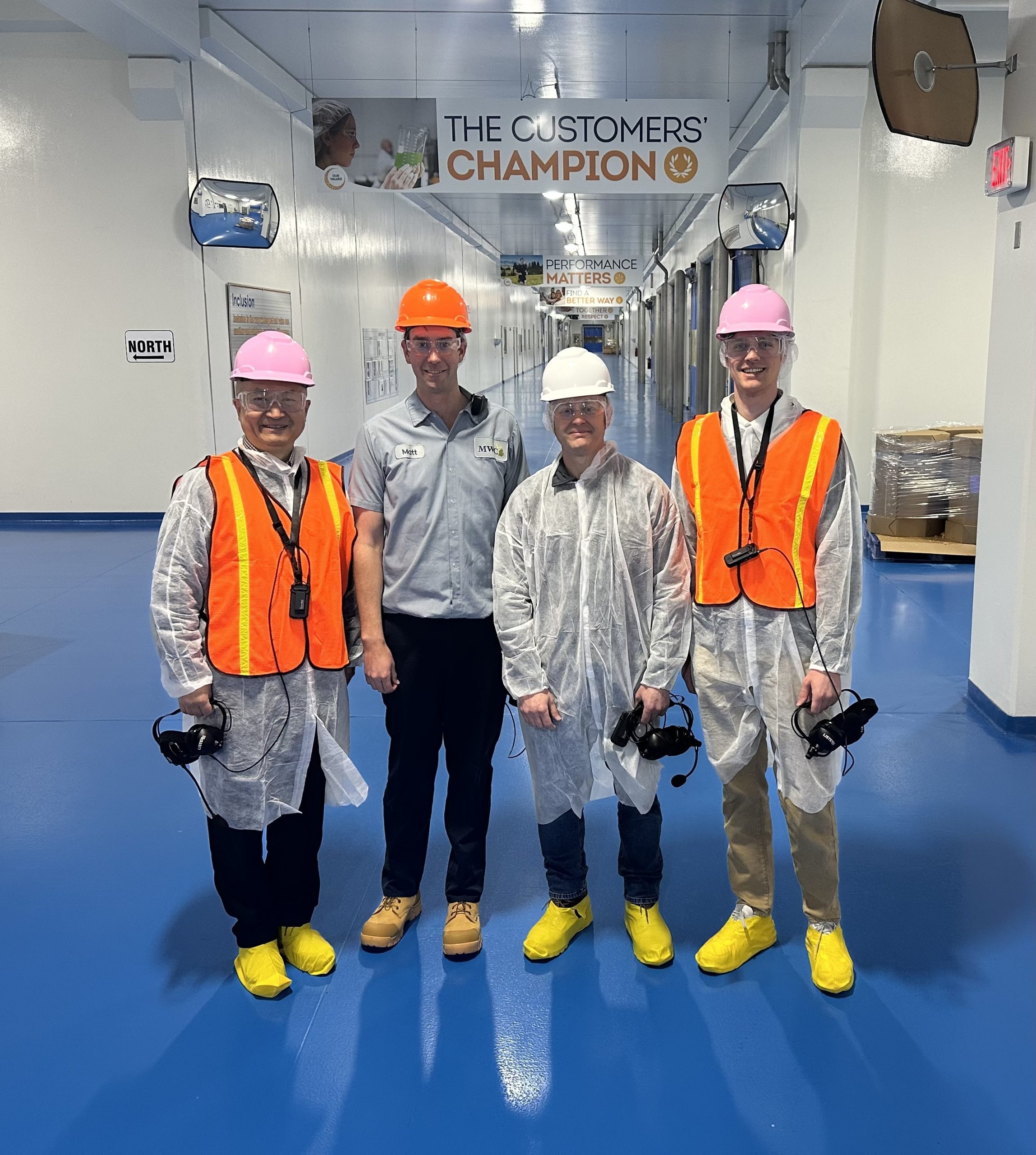
Opened in 2020, MWC is a joint venture between Glanbia, Dairy Farmers of America and Select Milk Producers. The facility is a cornerstone of Michigan’s agricultural economy, processing approximately 2.9 billion pounds of milk each year.
To put that scale into perspective, the 1.3 billion pounds of block cheese produced at the site since opening would stretch roughly 7,000 miles if divided into 40-pound blocks, reaching from St. Johns to the southern tip of South America.
That scale, however, comes with an equally large environmental footprint. The facility relies on a $25-million wastewater treatment system — including anaerobic digestion and membrane filtration — to reclaim water generated during cheese production and protect surrounding water resources.
Shortly after the facility came online, operators began to encounter compounding instabilities. Levels of pH fluctuated, aerobic sludge activity declined, and the system struggled to maintain routine, stable operation.
“We fundamentally weren’t tracking the correct key performance indicators,” said David Holmberg Jr., maintenance director at Glanbia. “Multiple issues were occurring simultaneously, creating instability in the wastewater treatment operation.”
At a facility of this magnitude, unstable wastewater treatment is more than a technical challenge. Without a reliable solution, production capacity can be constrained, regulatory risk increases and operations that support thousands of dairy farmers across the region can be put at risk.
To address the challenge, MWC turned to MSU’s Anaerobic Digestion Research and Extension Center (ADREC), a globally recognized program supported by MSU AgBioResearch.
Led by Professor Wei Liao in the MSU Department of Biosystems and Agricultural Engineering, ADREC bridges academic research and real-world application. Rather than treating the issue solely as an industry consultation, Liao integrated the challenge into a hands-on capstone project for undergraduate biosystems engineering students.
The student team, led by Carter Monson, then a senior and now a master’s student at MSU, worked directly with MWC operators to analyze system performance, diagnose microbial instability and develop a long-term operational strategy.
The result was a stabilized wastewater treatment process that has continued to operate reliably.
“The people at MWC were incredibly open and collaborative,” Monson said. “They gave us access to data, samples and operations, which allowed us to develop solutions that actually worked in practice, and gave us firsthand experience tackling real-world challenges in agricultural and food processing systems.”
For MWC leadership, that collaboration delivered value far beyond a short-term fix.
“This wasn’t about checking a box or solving one isolated issue,” said Matt Vanic, site director at MWC. “MSU brought a level of systems thinking and technical depth that helped us stabilize critical infrastructure and build a stronger foundation for long-term, sustainable operation. At the same time, we’re helping train the next generation of the workforce who understand what it takes to operate complex food processing facilities at scale.”
The tangible impact is clear: Stabilizing the wastewater system helped ensure that millions of pounds of Michigan milk continue to move through the facility each day, protecting local jobs, supporting dairy farmers, and preventing environmental strain on the St. Johns community.
With the system now operating reliably, the partnership is shifting from problem-solving to pioneering.
The next phase of collaboration focuses on advancing a circular water system within the facility. Milk is approximately 88% water, and cheese production requires removing about half of that volume. While MWC already reuses some treated water internally, analysis conducted at MSU ADREC shows that significantly greater reuse is possible.
By increasing internal water recycling, MWC aims to reduce its reliance on the city of St. Johns’ municipal water supply, further strengthening environmental sustainability while maintaining production at scale.
“It’s a fantastic idea.” Holmberg Jr. said. “Matt and I have been talking about this for a while because we really want to see it happen.”
“MWC could become the example for what a fully circular water system looks like in Michigan,” Liao said. “This is next level, and MSU has the expertise and capacity to help make that vision a reality.”
This article was sourced from AgBioResearch.
Opportunities for Partnership
The MSU Innovation Center is seeking companies and organizations interested in industrial wastewater treatment, circular water systems, and sustainable food processing solutions.
Whether you’re exploring sponsored research, licensing opportunities, or co-developing anaerobic digestion systems, membrane filtration technologies, or water reuse innovations for agricultural processing, we’re ready to collaborate.
Interested in partnering with MSU faculty on water management research and next-generation sustainable manufacturing solutions?
Visit innovationcenter.msu.edu or contact us to start the conversation.
About the MSU Innovation Center
The MSU Innovation Center is Michigan State University’s hub for corporate partnerships, technology commercialization, and startup support. By integrating MSU Technologies, Business Connect, and Spartan Innovations, the Center transforms groundbreaking research into real-world impact. Each year, the Innovation Center helps launch more than 130 discoveries into patented products and startup ventures, advancing economic development and improving lives locally and globally. Through strategic collaborations with faculty, industry, and investors, the Center accelerates innovation from concept to market—empowering Spartans to lead in entrepreneurship, research translation, and public-private partnerships. Learn more at innovationcenter.msu.edu