

The Breakthrough: Science Meets Urgency
In the race to address climate change, the ability to measure and value nature with precision has become a critical need for companies, governments, and communities alike. Michigan State University (MSU) and IORA Nature Tech have forged a partnership that is redefining what’s possible in this space. Their breakthrough: a platform that uses artificial intelligence, computer vision, and high-resolution satellite imagery to map and measure individual trees—from dense forests to scattered trees in farm fields and city parks. This technology enables precise carbon accounting, supports regenerative agriculture, and empowers communities, investors, and policymakers to make data-driven decisions.
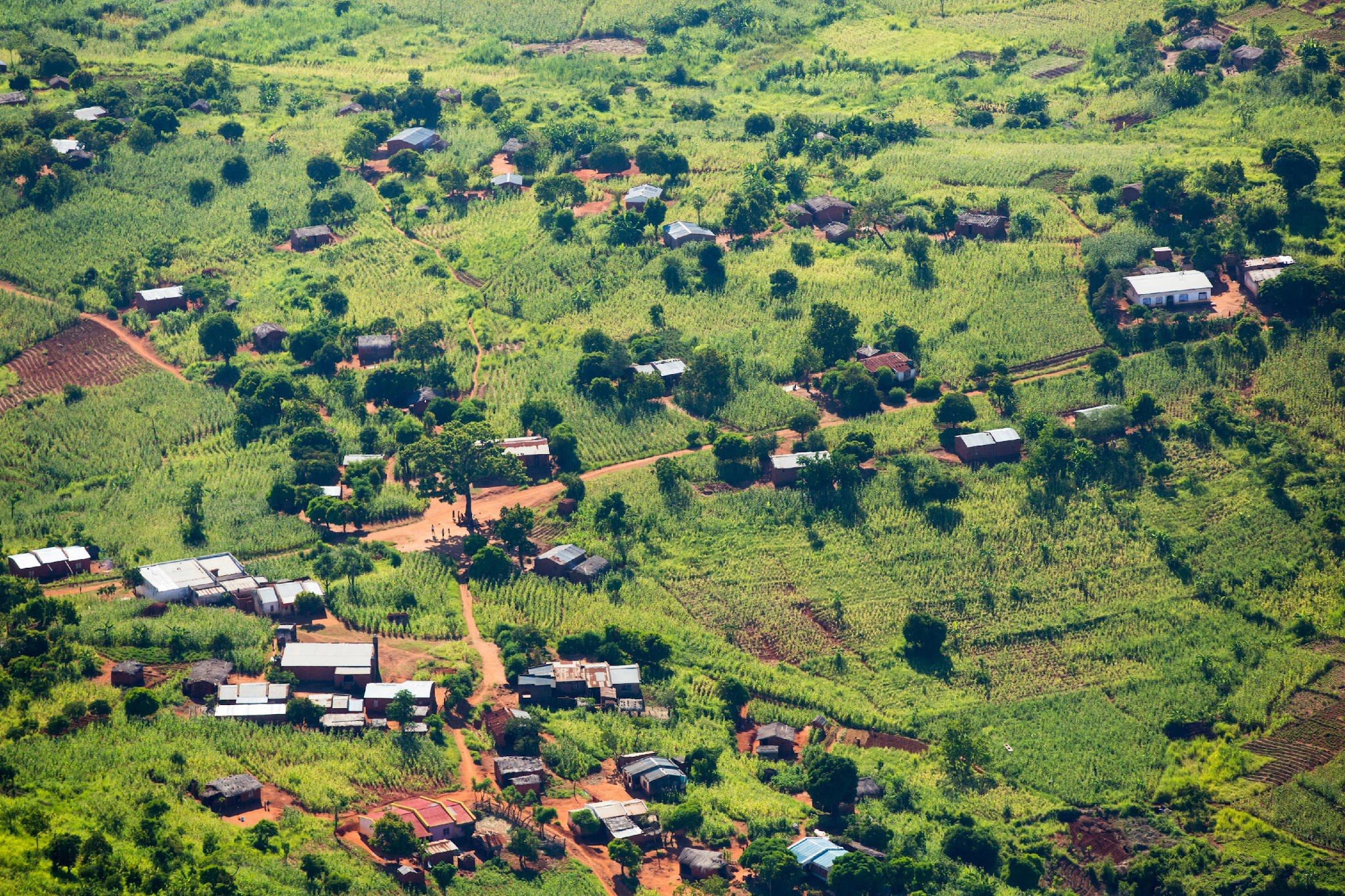
Science Meets Strategy: The Origin of IORA Nature Tech
The origin of IORA Nature Tech traces back nearly a decade to a USAID-funded partnership between MSU and IORA Ecological Solutions, an India-based environmental advisory firm specializing in nature-based climate solutions. The collaboration focused on developing Measurement, Reporting, and Verification (MRV) systems for the Reducing Emissions from Deforestation and Forest Degradation (REDD) initiative, a United Nations-backed climate strategy that incentivizes developing countries to reduce forest-related emissions and enhance carbon stocks. MRV systems are the backbone of REDD, enabling transparent, verifiable tracking of emissions reductions that are critical to carbon markets, climate finance, and compliance with frameworks like the Paris Agreement.
MSU’s team, headed by Dr. David Skole, Professor, Global Ecology, Climate Change, Earth Observations at MSU’s Department of Forestry, led the development of remote sensing tools and analytical dashboards to assess deforestation and forest cover change, while IORA Ecological Solutions contributed deep local expertise to integrate these systems into Indian government agencies. Together, they achieved major milestones, including India’s first state-level forest degradation baselines. This “global North-South” model exemplified how scientific innovation and regional implementation can drive meaningful climate action.
Building on this foundation, subsequent NASA grants enabled the development of novel algorithms to measure changes in forests and, crucially, Trees Outside Forests (TOF), which have been a long-overlooked but vital component of carbon accounting. This innovation expanded MRV beyond traditional forest boundaries, allowing for more inclusive and accurate carbon tracking across agricultural and heterogeneous landscapes.
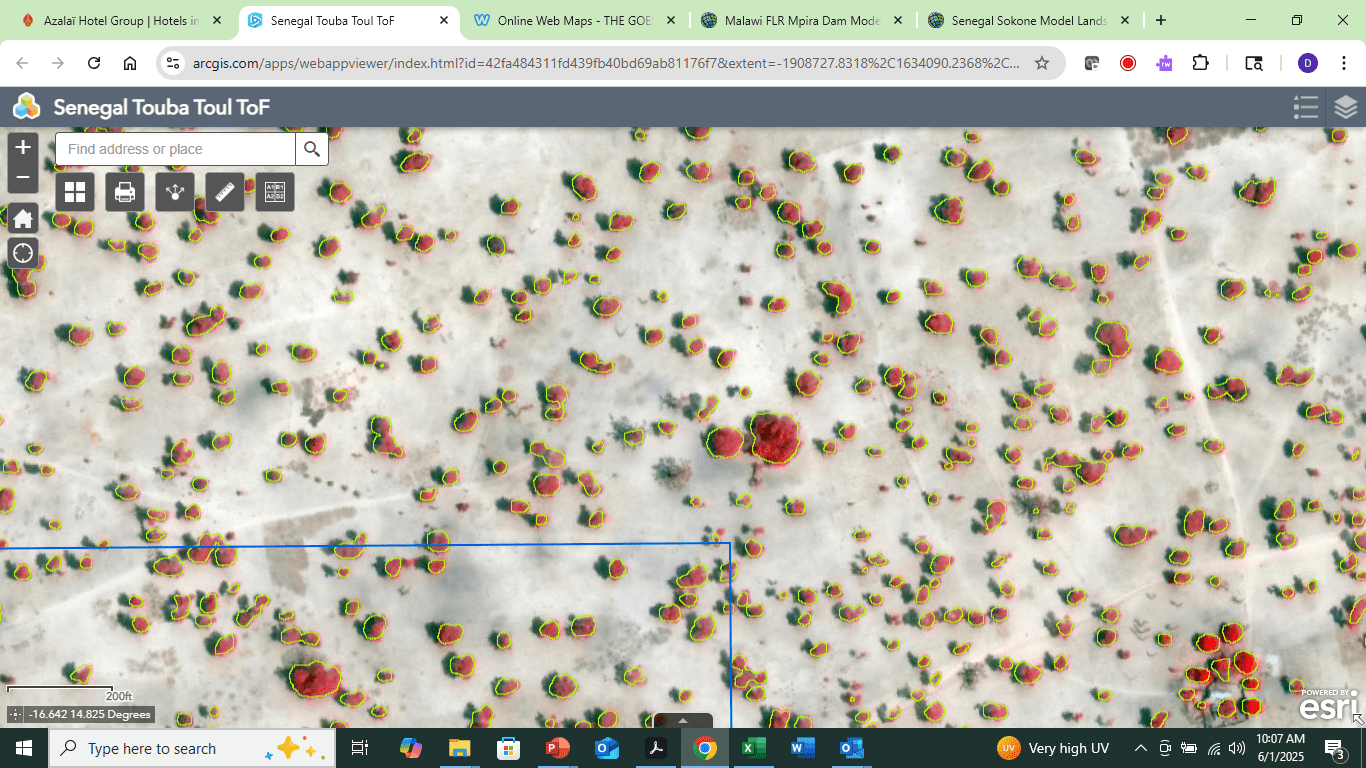
These breakthroughs laid the groundwork for the formation of IORA Nature Tech, a U.S.-based startup co-founded by MSU’s Dr. David Skole and IORA’s Ecological Solutions’ Swapan Mehra. The company was created to commercialize the intellectual property and expertise from both institutions, with a focus on tropical and developing countries. Its platform supports high-integrity carbon credits, deforestation-free supply chains, and scalable monitoring for restoration and climate adaptation projects.
“From the very beginning, both Dave and I had this vision of fostering a global collaboration—packaging the best in science with ground knowledge to create real-world impact, especially in tropical and developing countries,” said Swapan Mehra, CEO and Co-founder of IORA Nature Tech.
The Technology: AI, Satellites, and Big Data
What sets the IORA Nature Tech technology apart is its ability to map and measure every tree at scale. Using high-resolution satellite imagery and advanced deep learning models, the platform detects and segments individual tree crowns, even in complex agricultural or urban landscapes. This overcomes the limitations of traditional methods, which relied on coarse-resolution data and often missed scattered or isolated trees.
By combining crown area measurements with field data, the system estimates tree diameter and biomass using allometric equations, enabling direct calculation of above-ground carbon stocks at the individual tree level. This approach has been validated in diverse landscapes, including Rwanda, India, and West Africa, and consistently outperforms traditional national forest inventories in both accuracy and spatial detail.
“We’re moving from field sampling to full landscape measurement,” said Dr. Skole. “This convergence of AI, satellite data, and computing power is enabling things we couldn’t do before.”
One of the most important scientific insights from recent research is the scale and significance of TOF. In the Greater Rift Valley of Kenya, 28% of mapped trees were found outside forests, accounting for nearly half of the above-ground carbon stock. In Odisha, India, 58% of tree carbon was found in TOF systems. These “invisible” carbon sinks, found scattered across farmlands, savannas, and urban areas, have historically been ignored by both policymakers and markets. IORA Nature Tech’s platform brings them into view, enabling them to be counted, valued, and protected for the first time.
Recent studies published in Nature Climate Change and Environmental Research Letters confirm that individual-tree mapping reveals carbon stocks that are much higher and more spatially variable than those from traditional methods. In the Rift Valley of Kenya, the technology mapped 50 million trees with an uncertainty of just 15%, a level of precision previously unattainable at the national scale. In India, official estimates were underreporting TOF carbon stock by as much as half. Across Africa, similar approaches have shown that more than a quarter of tree cover is found outside areas previously classified as forest.

“We can now map every tree in a city or country—what used to take months or be impossible on foot or with sampling can be done in days with AI and satellite data,” said Dr. Skole.
“The IORA technology enables precise, verifiable measurement of charbon stocks in all tree-based systems. This is especially important as companies face increasing regulatory and consumer pressure to ensure their supply chains are deforestation-free and climate-resilient,” said Brad Fingland, Director of Venture Creation at the MSU Research Foundation.
The Role of the MSU Innovation Ecosystem
Together, the MSU Innovation Center and MSU Research Foundation played a pivotal role in IP protection, technology licensing, providing startup support, legal guidance, funding, mentorship, and commercialization expertise to help launch IORA Nature Tech. MSU Technologies (MSUT), the university’s technology transfer office, helped navigate intellectual property, licensing, and conflict-of-interest pathways critical to launching the venture.
MSUT worked closely with Dr. Skole’s team to ensure the technology was protected and positioned for commercial success. The startup was incorporated as a Delaware C-Corp with support from local LEAP funding and received its initial startup investment from Red Cedar Ventures, a fund managed by the MSU Research Foundation.
“IORA Nature Tech has two big things going for it: a convincing solution for a market challenge and a strong team,” said Fingland. “From customer discovery to company formation, we helped accelerate the translation of the technology into a startup. All of this support is very typical for an MSU startup.”
The Innovation Center’s partnership with the MSU Research Foundation offers a diverse and comprehensive level of support to MSU startups, including access to Mentors-in-Residence (MIRs), Entrepreneurs-in-Residence (EIRs), and commercialization specialists who provide ongoing guidance to help the IORA Nature Tech team anticipate market challenges, refine their business model, and prepare for investor engagement.
“We find that early engagement with our mentors helps avoid many later-stage challenges,” Fingland added. “It accelerates successful company launches efficiently and focuses the team on executing the critical pathways required to secure funding or launch an initial product.”
The Impact: Integrity, Transparency, and Opportunity
As companies and investors navigate rising regulatory and consumer expectations for deforestation-free, climate-resilient supply chains, the IORA Nature Tech platform provides a scalable, credible solution for ESG reporting, supply chain transparency, and risk management. By delivering investment-grade data on carbon sequestration, tree health, and land use, it supports nature-based offset projects and regenerative agriculture across diverse supplier landscapes.
A major innovation of the IORA Nature Tech system is its ability to overcome the limitations of monitoring in regions dominated by smallholder agriculture and fragmented ecosystems. Smallholders—farmers managing modest plots with family labor—are essential to local food production and land stewardship but often lack access to technology, data, and financial resources. The platform’s fine-scale, affordable tree-level monitoring empowers smallholders and rural communities to participate in carbon markets, supports climate-resilient agriculture, and advances poverty alleviation.

“Our technology dispels errors and gives you something so accurate, you’re no longer relying on extrapolated samples. You’re seeing every tree. That’s the level of transparency marquee investors like Microsoft demand,” notes Mehra. This level of precision means carbon credits can contribute a significant portion of a smallholder’s income.
The Future: Scaling Impact Across Sectors
The IORA Nature Tech platform leverages high-resolution satellite imagery, deep learning, and field data to deliver precise, scalable, and actionable tree-level carbon accounting. This powerful system empowers a wide range of stakeholders to make climate-smart decisions, manage environmental risks, and accelerate progress toward net-zero goals.
The platform provides targeted value to multiple users: Investors gain robust insights into tree growth, harvest cycles, and sustainable sourcing for timber, pulp, and bioproducts; Corporations remotely monitor tree-based supply chains to ensure compliance with evolving sustainability standards; Governments generate accurate inventories of trees outside forests, strengthening national carbon accounting and climate reporting; and Urban Planners map tree cover for critical benefits like shade, air quality, and stormwater management, enhancing climate resilience. The platform’s transferable models enable rapid, scalable deployment across regions, crucial for unlocking investment in sustainable landscapes globally.
This collaboration validates the power of integrated approaches, reflecting a broader shift in global finance toward recognizing nature as both an asset class and critical infrastructure. Leveraging MSU’s legacy in forestry and innovation.
“Through this collaboration, we could contribute to turning Michigan into a hub for the future of nature investing,” says Mehra.
The partnership ultimately demonstrates what is possible when visionary science meets entrepreneurial spirit and community engagement to deliver scalable solutions for global climate resilience and sustainable development.
###
For additional reading about the technology behind IORA Nature tech:
Trees outside of forests as natural climate solutions
Partner with MSU to Shape the Future of Climate Innovation
The MSU Innovation Center invites companies and organizations to collaborate on the next generation of nature-based climate solutions. Whether you’re seeking high-integrity carbon credits, tools to meet deforestation-free sourcing requirements, or technology to support regenerative agriculture and climate resilience, MSU offers a proven model for collaboration.
The MSU Innovation Center connects corporate partners with multidisciplinary researchers, cutting-edge geospatial and AI platforms, and a commercialization pipeline that transforms research into real-world solutions.
Ready to co-develop transformative climate technologies or license innovations with global impact?
Visit https://innovationcenter.msu.edu or contact us to start the conversation.