

A new study could explain why some mothers can still pass Group B Streptococcus, or GBS, to their babies after childbirth even when they’re treated with antibiotics.

A Michigan State University research team discovered postpartum GBS strains with mutations that allow them to survive in the birth canal and resist treatment. These strains can infect newborns and infants and cause dangerous illnesses like pneumonia, meningitis and sepsis.
The findings, published in mBio, mark the first time GBS strains were identified as what’s known as “mutators” — bacteria with dramatically elevated mutation rates, caused by defects in their own DNA repair machinery.
Identifying these mutations is the first step toward understanding how GBS is evading antibiotic treatment and finding new drug targets to prevent or treat late-onset GBS infection in babies.
“These bacteria are savvy, and they’ve adapted strategies to avoid getting killed by antibiotics — not in the ways we expected, but through other mechanisms,” said Shannon Manning, senior author and professor of microbiology, genetics and immunology.
The mystery of late-onset GBS disease
GBS is a bacterium commonly found in the microbiota of healthy people, living in the gastrointestinal and genital tracts. Up to a third of pregnant women have it in their birth canal, where it can be transmitted to the baby during childbirth. For newborns, whose immune systems aren’t yet up to speed, this exposure can lead to serious infection.
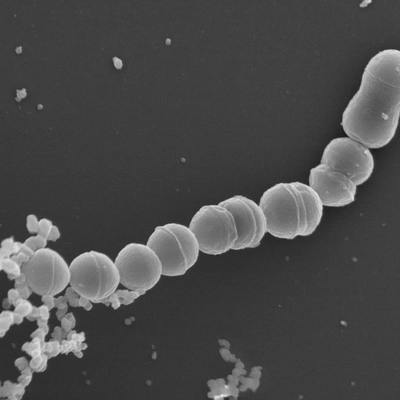
When GBS was first recognized as a major threat in the 1970s, it was a leading cause of illness and death in newborns, and over half of infected babies died. But in the 1990s, a new preventative treatment became standard practice: Screen all pregnant women for GBS late in pregnancy and give carriers antibiotics during labor to reduce the bacteria load at the moment of delivery. This approach, called intrapartum antibiotic prophylaxis, or IAP, has since reduced early-onset GBS infections in newborns between zero and seven days old by more than 80%. It’s a major success story in neonatal medicine.
But some infants develop the disease after they’ve gone home from the hospital, an infection called late-onset GBS disease, which can arise between one week and three months of age. For reasons that are not entirely clear, the prevalence of late-onset GBS disease hasn’t budged since IAP was introduced.
Old bacteria, new tricks
To try to understand why late-onset GBS disease is still occurring, researchers collected GBS from 212 pregnant women at their regular GBS screening, then checked again for the bacteria six weeks postpartum. Most of the women with GBS received the standard IAP and delivered healthy babies. Surprisingly, almost 60% of the women tested positive for GBS at the second postpartum screening.
In the new study, Manning’s former graduate student, Macy Pell, compared the genomes of the bacteria in 34 of the women, before and after the antibiotic treatment and childbirth. They found that in the vast majority of cases, the prenatal and postpartum strains were highly similar, suggesting that the antibiotics did not completely eliminate the bacteria.
The postpartum GBS strains did not acquire genes related to what is traditionally considered antibiotic resistance. However, most strains had other mutations that may have impacted their survivability, such as in genes related to cell division and adherence. The team also found changes in biofilm production in some postpartum strains, a first step in understanding the functional consequences of the mutations.
Now that the team has identified a catalog of over 500 mutations, future work will focus on determining how those mutations affect bacterial survival in laboratory and model systems.
“We are trying to understand how the bacteria are evading the drugs and find additional drug targets that could guide the development of new therapeutics or prevention strategies,” Manning said. “That’s our hope.”
This article was sourced from MSUToday.
Opportunities for Partnership
The MSU Innovation Center is seeking companies and organizations interested in antimicrobial resistance, maternal-infant health, and bacterial genomics research.
Whether you’re exploring sponsored research, licensing opportunities, or co-developing novel antibiotics, bacterial mutation screening methods, or preventive therapeutics for neonatal infections, we’re ready to collaborate.
Interested in partnering with MSU faculty on infectious disease research and next-generation antimicrobial solutions?
Visit innovationcenter.msu.edu or contact us to start the conversation.
About the MSU Innovation Center
The MSU Innovation Center is Michigan State University’s hub for corporate partnerships, technology commercialization, and startup support. By integrating MSU Technologies, Business Connect, and Spartan Innovations, the Center transforms groundbreaking research into real-world impact. Each year, the Innovation Center helps launch more than 130 discoveries into patented products and startup ventures, advancing economic development and improving lives locally and globally. Through strategic collaborations with faculty, industry, and investors, the Center accelerates innovation from concept to market—empowering Spartans to lead in entrepreneurship, research translation, and public-private partnerships. Learn more at innovationcenter.msu.edu