


The potatoes behind America’s potato chips are getting an upgrade.
Researchers at Michigan State University have developed five new potato varieties designed to help strengthen the U.S. chip supply by improving disease resistance, long-term storage and processing reliability.

The varieties — Manistee, Mackinaw, Petoskey, Huron Chipper and Blackberry — are the result of more than two decades of breeding research led by MSU potato breeder David Douches. Together, they were created to help growers produce potatoes that can store for months, withstand disease pressure and consistently fry light and crisp — even late in the processing season.
“Potato chips are made year-round, but potatoes are harvested once a year,” said Douches, professor in MSU’s Department of Plant, Soil and Microbial Sciences. “If a variety can’t maintain quality in storage or handle disease pressure, that affects the entire supply chain.”
Michigan is widely recognized as the nation’s leading producer of potatoes grown specifically for potato chips. Roughly 70% of the state’s potato crop is destined for chip processing, and industry estimates suggest that about one in four bags of potato chips eaten in the United States contains Michigan-grown potatoes.
Because chip production operates year-round, storage performance is critical. Potatoes must maintain low sugar levels and structural integrity for up to eight months to ensure consistent color and flavor when fried. Breakdowns during storage can result in significant losses for growers and processors.
That’s where these five varieties come in.
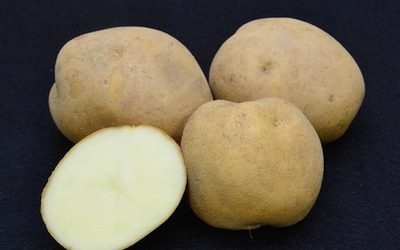
- Manistee helped establish a benchmark for long-term storage, maintaining excellent chip quality deep into the processing season. Building on that foundation, newer varieties add additional layers of resilience.
- Mackinaw combines strong storage stability with resistance to potato virus Y and late blight — two major threats to potato crops worldwide.
- Petoskey produces starch-rich potatoes that fry crisp and absorb less oil, while also resisting common scab and maintaining chip color in storage.
- Huron Chipper offers strong yield potential, adaptability across growing regions and improved late blight resistance.
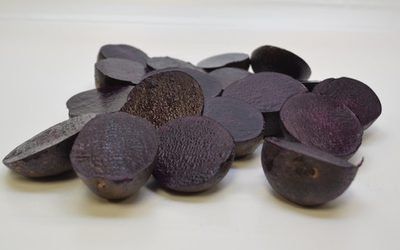
- Blackberry, a purple-skinned and purple-fleshed variety, expands MSU’s breeding portfolio into the fresh and specialty market while carrying extreme resistance to potato virus Y.
“You can’t rely on a single variety,” Douches said. “Different climates, disease pressures and storage conditions require different strengths. Having multiple varieties spreads risk and keeps the supply stable.”
Modern potato breeding requires balancing yield, processing quality, storage life and disease resistance — traits that are often difficult to combine.
“These potatoes are about resilience,” Douches said. “Every resistance trait we build into a variety is one less vulnerability in the system.”
The varieties were evaluated through multiyear field trials in Michigan and national testing programs across major potato-producing states. As certified seed production expands and commercial acreage increases, their impact is moving from research plots into farmers’ fields and processing plants.
“As a public university breeding program, our mission is to support the entire industry,” Douches said. “Success means growers can stay competitive and consumers can rely on a consistent product.”
For a snack that millions of Americans reach for every day, the science behind the potato plays a larger role than most people realize.
“Potatoes may look simple,” Douches said. “But breeding them to meet modern demands is anything but.”
This research was funded by the Michigan Potato Industry Commission, the United States Department of Agriculture’s National Institute of Food and Agriculture and by Potatoes USA.
This story originally appeared on MSUToday
Opportunities for Partnership
The MSU Innovation Center is seeking companies and organizations interested in crop breeding innovation, potato supply chain resilience, and specialty agricultural variety development. Whether you’re exploring sponsored research, licensing opportunities, or co-developing disease-resistant potato varieties, long-term storage optimization solutions, or specialty fresh market crop innovations, we’re ready to collaborate. Interested in partnering with MSU faculty on potato breeding research and next-generation chip processing supply chain solutions?
Visit innovationcenter.msu.edu or contact us to start the conversation.
###
About the MSU Innovation Center
The MSU Innovation Center is Michigan State University’s hub for corporate partnerships, technology commercialization, and startup support. By integrating MSU Technologies, Business Connect, and Spartan Innovations, the Center transforms groundbreaking research into real-world impact. Each year, the Innovation Center helps launch more than 130 discoveries into patented products and startup ventures, advancing economic development and improving lives locally and globally. Through strategic collaborations with faculty, industry, and investors, the Center accelerates innovation from concept to market—empowering Spartans to lead in entrepreneurship, research translation, and public-private partnerships. Learn more at innovationcenter.msu.edu