

Dr. Tamara Bush and Dr. Justin Scott have spent years studying how seating design can help reduce pressure injuries for patients with limited mobility. Their work led to Sit SenseTM, a smart seating technology that automatically redistributes pressure by adjusting a patient’s position before vulnerable areas of the body are placed at greater risk. Built on biomechanics research showing how strategic seat articulation can shift pressure and improve blood flow, Sit Sense, Inc.is now moving from university discovery toward clinical and commercial application.
 Today, Sit Sense, Inc. has evolved beyond a university research project into a startup company with ambitions to improve patient care in hospitals, rehabilitation centers, nursing facilities, and even aging in the home. But the journey from laboratory discovery to startup formation did not happen overnight. It required a coordinated network of translational funding, entrepreneurial education, mentorship, and regional startup support that helped transform an innovative concept into a commercialization-ready venture.
That path reflects the purpose of Michigan State University’s (MSU) innovation ecosystem: helping promising research move through the practical steps required to become useful in the world.
Turning Research into a Market-Ready Product
At each stage, the MSU Innovation Center helped convert Sit SenseTM from promising research into a venture prepared for the marketplace. MSU Technologies guided the intellectual property strategy and patent process, while the broader Innovation Center network helped connect the team with mentors, startup resources, and translational funding opportunities that could move the technology beyond the laboratory.
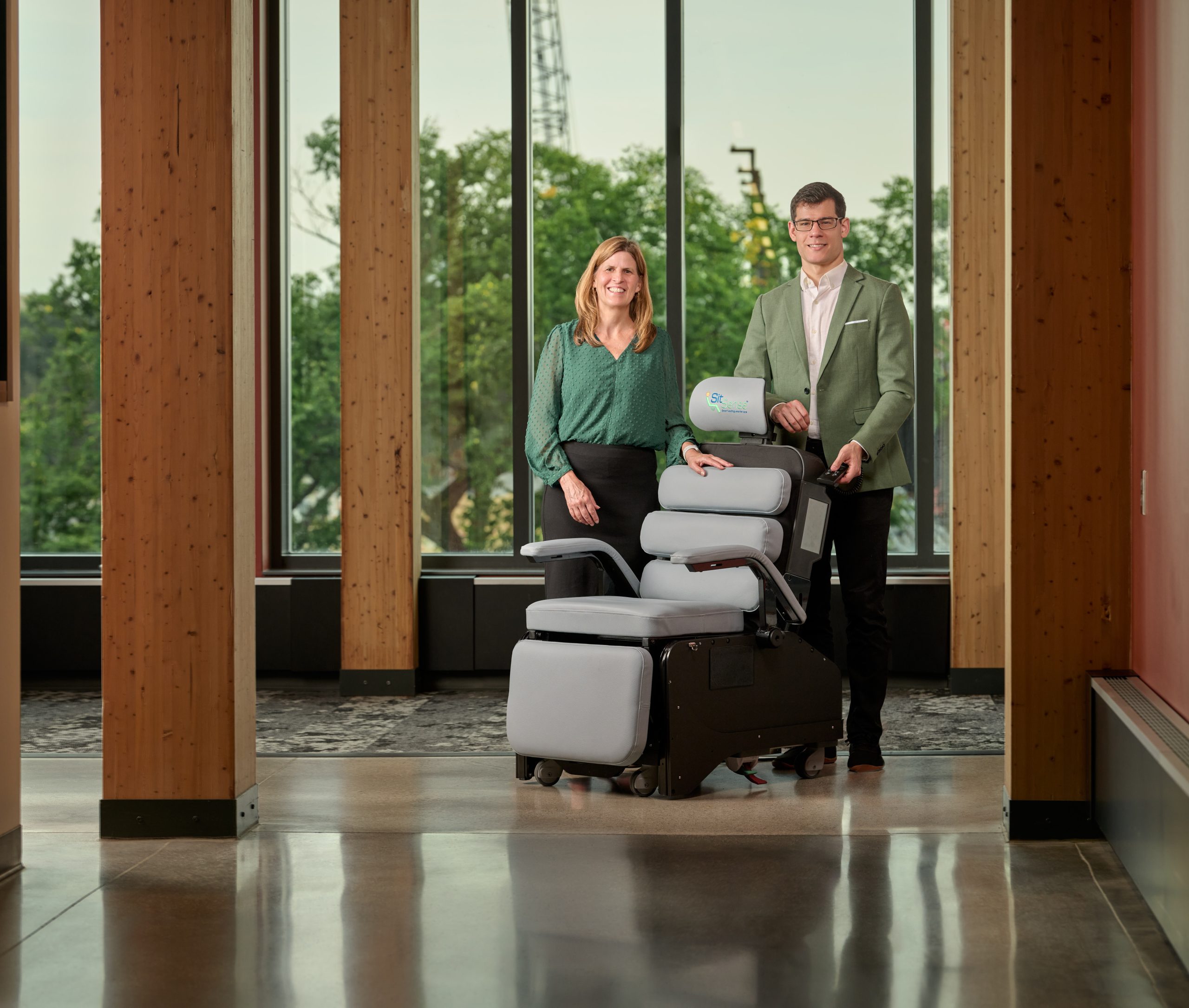 The foundation of Sit SenseTM began with research conducted by Dr. Bush and Dr. Scott examining how chair movement and seating configurations can redistribute pressure and improve blood perfusion in vulnerable body regions. Their findings showed that specialized chair articulations could reduce pressure in high-risk areas while increasing blood flow, both important factors in reducing pressure injury risk.
“Pressure injuries place a tremendous burden on both patients and the healthcare system,” said Dr. Bush. “Our goal has always been to create a technology that can continuously monitor and adjust seating positions, relieving pressure before injuries occur and helping improve quality of life for patients.”
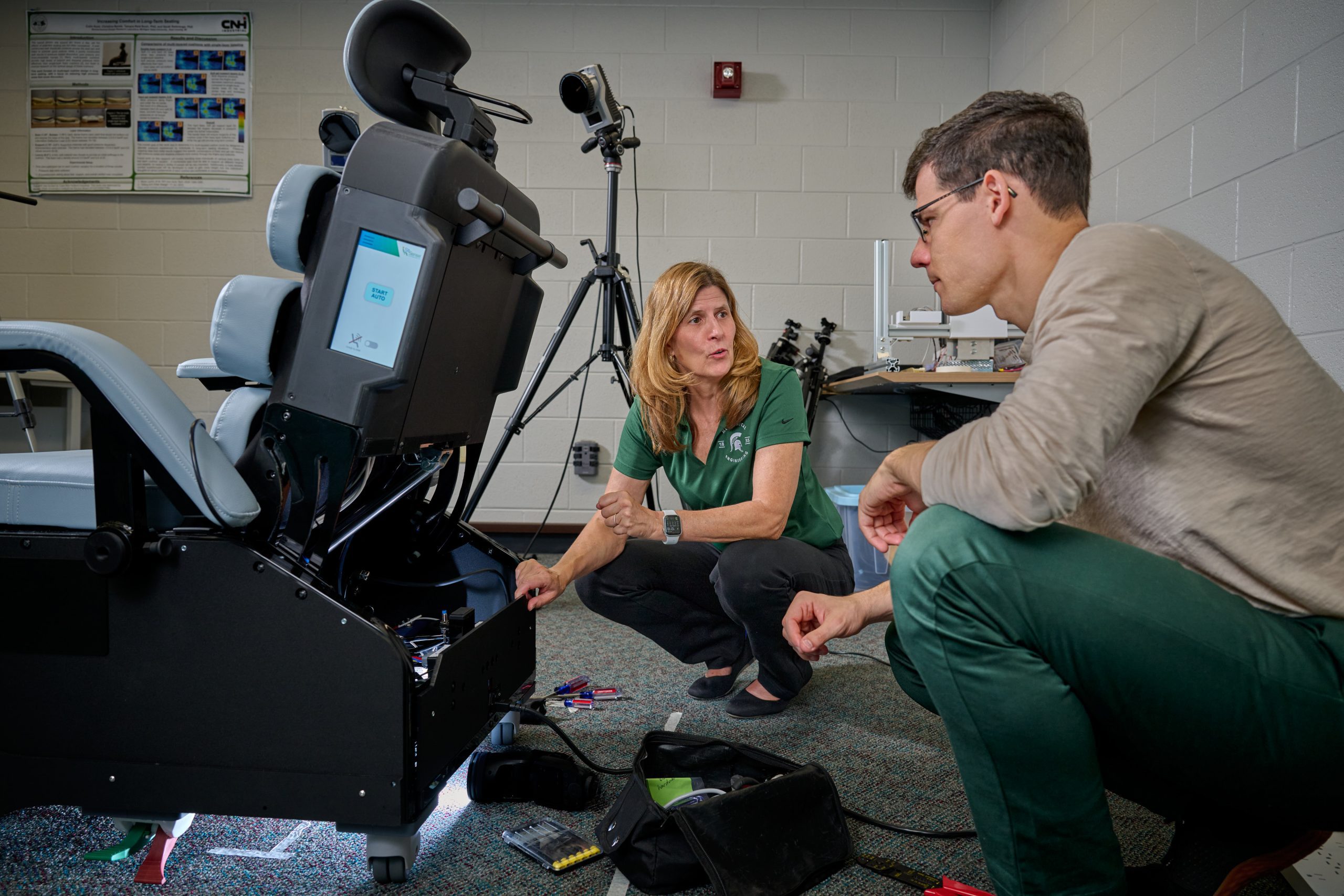 A major commercialization milestone came in 2023, when the Sit Sense, Inc. researchers received their first translational funding through the Advance Grant program based in the MSU Innovation Center. This critical funding supported initial prototype development and the early testing and design improvements needed to move beyond an initial lab-built model to create a substantially upgraded, pre-commercial version better suited for demonstrations, investor conversations, and future clinical use. Development of the improved model occurred under a 2025 grant provided through the Michigan Translational Research and Commercialization (MTRAC) program. Both Advance and MTRAC are competitive statewide translational grant programs administered by the Michigan Economic Development Corporation (MEDC) and funded through the Michigan Strategic Fund. Together, they proved to be catalytic in the development of Sit SenseTM.
The Venture Fellow Bridge
Another important turning point for Sit Sense was participation in MSU’s Venture Fellows Postdoc program.
The one-year program, supported through a partnership among MSU, the MSU Research Foundation, the MEDC, and the Tech Transfer Talent Network, helps recent Ph.D. graduates gain hands-on commercialization experience while advancing promising university technologies toward startup formation. Fellows receive entrepreneurial training, mentoring, customer discovery support, market analysis experience, and exposure to the practical realities of building a company.
 For Dr. Scott, the program provided something that traditional postdoctoral training often does not: a structured opportunity to learn commercialization while actively building a business. Traditional postdoctoral pathways typically focus on publishing papers and securing research grants. The Venture Fellows program instead emphasizes entrepreneurship, customer discovery, commercialization strategy, and startup development.
“The Venture Fellows Postdoc program created a bridge that allowed us to move from a university research project toward a real company,” said Dr. Scott. “It gave us the opportunity to learn the commercialization process while creating the plans and connections needed to execute it.”
From Dr. Bush’s perspective, the fellowship filled a critical gap.
“There isn’t always a clear on-ramp from academia into company formation,” she said. “The Venture Fellows Postdoc program provided a bridge that allowed us to transition from university research toward commercialization while building relationships with the broader entrepreneurial ecosystem.”
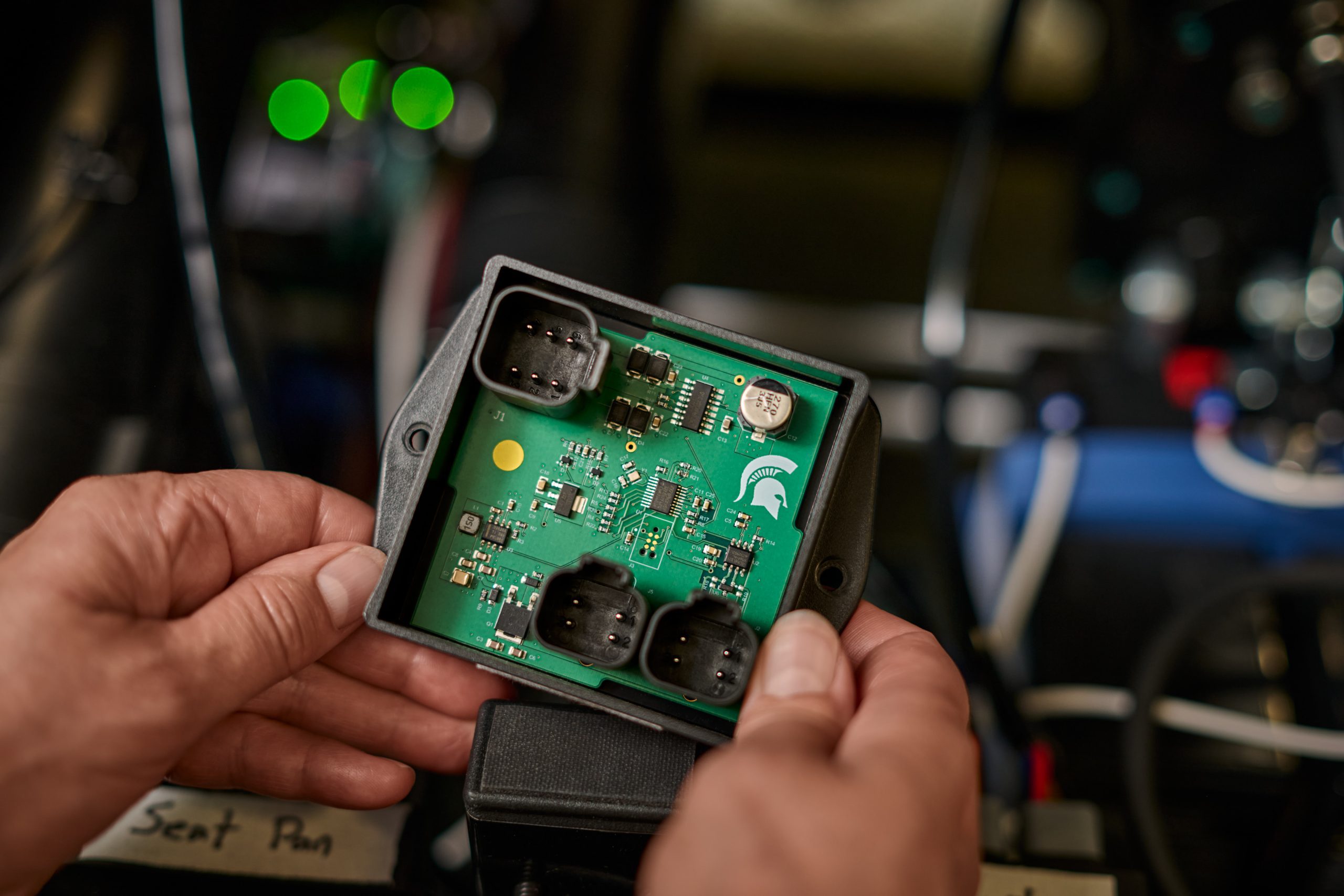 The experience helped reshape the team’s commercialization strategy. Licensing the technology had initially seemed like the most likely path forward. As the team gained exposure to startup resources, entrepreneurial training, and investor opportunities, they began to see company formation as a viable way to pursue funding, build partnerships, and carry the technology toward broader impact.
“It changed our trajectory,” said Dr. Bush. “We began to recognize that creating a company opened the door to additional funding opportunities, investor engagement, and a broader path to impact.”
Support Beyond Campus
After building a stronger commercialization foundation through MSU’s innovation ecosystem, Sit Sense continued to advance through a coordinated network of university, regional, and small-business development resources across the greater Lansing community.
The MSU Research Foundation, Lansing Economic Area Partnership (LEAP), and Michigan Small Business Development Center (SBDC) worked together to provide Sit Sense with entrepreneurial guidance, business development assistance, funding support, and connections to specialized resources as the technology transitioned from university research into an independent startup company. This collaborative support helped the team navigate company formation, strengthen its commercialization strategy, access Local Accelerator Funds and Business Accelerator Funds, and continue advancing the automated medical recliner toward clinical readiness.
 Together, these organizations connected Sit Sense with mentors, specialized business services, customer and market development resources, entrepreneurial events, funding opportunities, and industry and healthcare relationships. The broader regional ecosystem also connected the company with resources available through the Lansing Regional SmartZone and East Lansing Technology Innovation Center, providing a local commercialization environment that complemented the technology development and startup support originating at MSU.
This combination of university and regional support helped Sit Sense strengthen its market validation through healthcare partnerships, pilot activities, and continued customer engagement. It also helped position the company to secure a $1.55 million National Science Foundation (NSF) Small Business Innovation Research (SBIR) Fast-Track award, with additional grant application support from the BBC Entrepreneurial Training and Consulting (BBCetc), for continued development of its automated medical recliner.
“LEAP is thrilled to see another medical tech company take form in our local ecosystem,” said Bob Trezise, LEAP president and CEO. “Sit Sense, Inc. isn’t just a company, it represents an intentional effort through the partnership of MSU Research Foundation, MSU Innovation Center, East Lansing Technology Innovation Center, and the SmartZone to cultivate a groundbreaking idea into a company that can make a strong economic as well as societal impact.”
A Model for Michigan State Innovation
Sit Sense, Inc. illustrates the power of bringing together research excellence, technology commercialization, entrepreneurial education, translational funding, and community partnerships.
The company benefited from multiple layers of support, including university research funding, intellectual property protection and commercialization assistance from MSU Technologies, translational funding programs such as MTRAC, the Venture Fellows Postdoc program, mentorship, startup development resources from the MSU Research Foundation, and regional entrepreneurial support.
Together, those resources helped transform an academic discovery into a company pursuing commercialization, clinical adoption, and real-world patient impact.
 “Sit SenseTM is an excellent example of what can happen when researchers engage with the full innovation ecosystem,” said Jon Debling, Senior Innovation Manager at the MSU Innovation Center. “The combination of translational funding, commercialization support, entrepreneurial training, and startup mentorship helped move this technology from promising research toward becoming a company capable of delivering real-world impact.”
Explaining the supporting role of entities like the MSU Research Foundation in MSU’s Innovation Ecosystem, Frank Urban, Director of Venture Creation for Life Sciences at the MSU Research Foundation said, “Faculty inventions need more than funding to reach the marketplace. They need people, mentorship, entrepreneurial talent, and sustained funding. Sit Sense, Inc. demonstrates how combining those resources can help transform university innovation into a company positioned to improve lives and create economic opportunity.”
As Sit Sense, Inc. continues advancing its technology and pursuing commercialization, the company represents more than a promising healthcare innovation. It shows how Michigan State University can help researchers combine discovery, commercialization guidance, translational funding, entrepreneurial talent, and regional partnerships to move ideas from the lab toward meaningful patient impact.
###
About Sit Sense:
Sit Sense is a fast-growing, Michigan-based startup changing how pressure sores are prevented across healthcare settings. It is based on technology developed at Michigan State University. Sit Sense is actively soliciting potential customers to try its recliner and to give feedback. To learn more about Sit Sense and to sign up for additional information, visit https://sit-sense.com.