


The modern electrical grid faces unprecedented pressure. As the prevalence of electric vehicles, data centers, and electric heating grows, power demand surges. Yet the traditional solution remains costly, time-consuming “wire-and-pole” upgrades.
This year’s MSU Innovation Center Startup of the Year, Switched Source, offers a faster, more efficient solution. Using advanced power electronics to rebalance electricity flows in real time, it helps utilities unlock latent grid capacity without new substations or additional wiring.
“Switched Source stands out because of its immense commercial potential and the global impact this technology can have,” says Tommy Skinner, Director of Venture Investments at the MSU Research Foundation. “They’re at that critical inflection point—the hockeystick growth phase. A decade of rigorous R&D is now meeting a massive market need.” 
A Simple Idea with Significant Impact: Rebalancing the Grid
“Imagine you’re at a sporting event with three lines to get in,” explains Charlie Murray, CEO and CoFounder of Switched Source. “Two lines are fifty people deep, while the third is empty—but you’re stuck where you started. In the utility world, you can’t just move to the open line.”
In theory, traffic should flow evenly across all “lines.” In reality, electricity demand is uneven and constantly changing. Homes and businesses often draw power from a single phase at different times, leaving one “line” overloaded while others remain underused.
This imbalance creates costly math. When one phase hits its limit, the circuit is determined to be full, and utilities may then plan multi-million-dollar upgrades. In reality, much capacity remains available but unevenly distributed.
Switched Source’s flagship device, the Phase-EQ, acts as an intelligent interchange point on the electric grid. Installed on distribution circuits, it detects imbalances in electrical load and reroutes power across three phases, distinct electrical pathways, in real time. This creates a more balanced, reliable system and significantly increases usable capacity.
Placed in the right locations, the PhaseEQ can increase available capacity by 10 to 25 percent, depending on circuit conditions, without adding a single new mile of wire.
Capacity Unlocked, Upgrades Deferred
Skinner describes Phase-EQ as a “real-time load balancer” that gives utilities immediate flexibility. This flexibility is vital because alternatives are slow and costly.
Without such tools, utilities often resort to reconductoring. This means replacing or adding wire on existing circuits. Skinner notes this process can take months or years for a single circuit and cost $1 to $2 million per mile.
Unlocking capacity on existing infrastructure lets utilities defer major construction, speed new connections, and reduce costs to customers.
“We develop tools that automate manual grid processes,” Murray says. “Our goal is to enable more electrical load—residential, commercial, industrial—to connect without costly upgrades.” 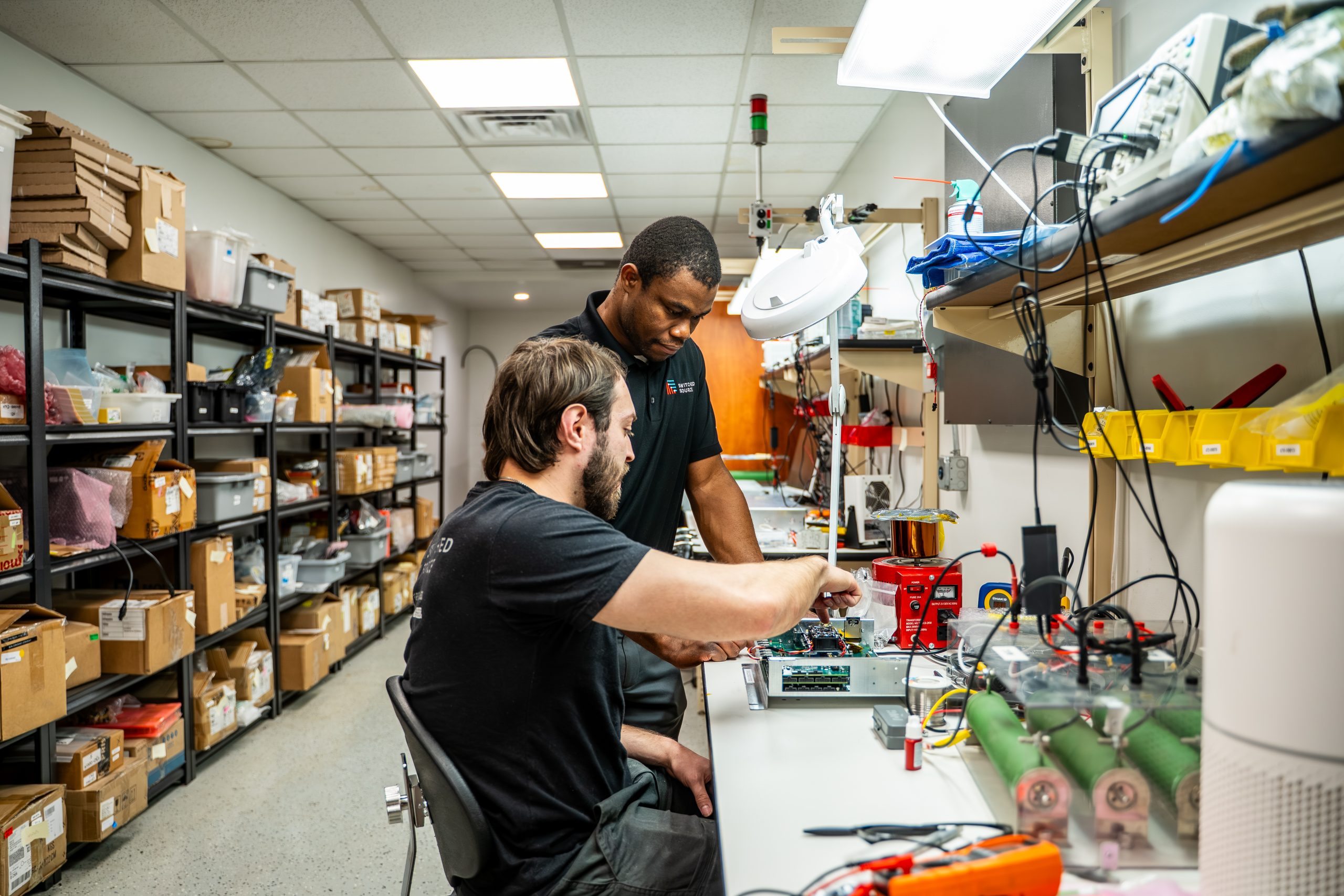
Ten Years of Technical Grit
Achieving this outcome required a decade of engineering effort. The main challenge was scale. Common power electronics, such as those in laptops or EV chargers, operate at low voltages, while the distribution grid runs at 15,000 volts.
“The challenge isn’t the parts, it’s getting them to perform reliably at utility scale,” says Lane Nelson, COO and Co-Founder. “We developed methods to stack lower-voltage, off-the-shelf components so they safely operate at utility-scale voltages. The parts are standard. The innovation lies in their integration and control under extreme conditions.”
That long R&D road, Skinner says, is what sets the company apart.
“Many would have quit after three or four years,” he says. “Charlie and Lane stayed committed because they knew this technology was exactly what the grid would need.”
Listening to the Market
Technical excellence alone was insufficient. Early on, Switched Source developed the Tie-Controller, a sophisticated device routing power between circuits or substations. Despite its power, it was too complex for general adoption.
Instead of forcing market acceptance, the founders pivoted to the Phase-EQ. It’s a simpler device that installs like a capacitor bank and addresses a common, well-understood issue: phase imbalance.
“We realized we had to meet utilities where they are,” Murray says. “By simplifying the interface, we focused on one clear problem. This allowed us to create a solution planners can easily integrate into existing toolkits.” 
From MSU Research to Real World Impact
Murray and Nelson met while pursuing MBAs at the University of Chicago Booth School of Business, but the technical foundation of Switched Source originated at Michigan State University. Licensing the technology from MSU was an early leap of faith as well as a turning point.
“Lane left a comfortable career to join me in the trenches,” Murray recalls. “We spent years running into brick walls together. That shared grit mattered.”
Throughout those early years, MSU’s commercialization ecosystem played a key role. The founders describe support that went far beyond a transactional license.
“The tech transfer office was our connective tissue,” Nelson says. “They helped us navigate grants, contracts, and early customer engagement. They didn’t just sign the license and walk away. They were invested in our success.” 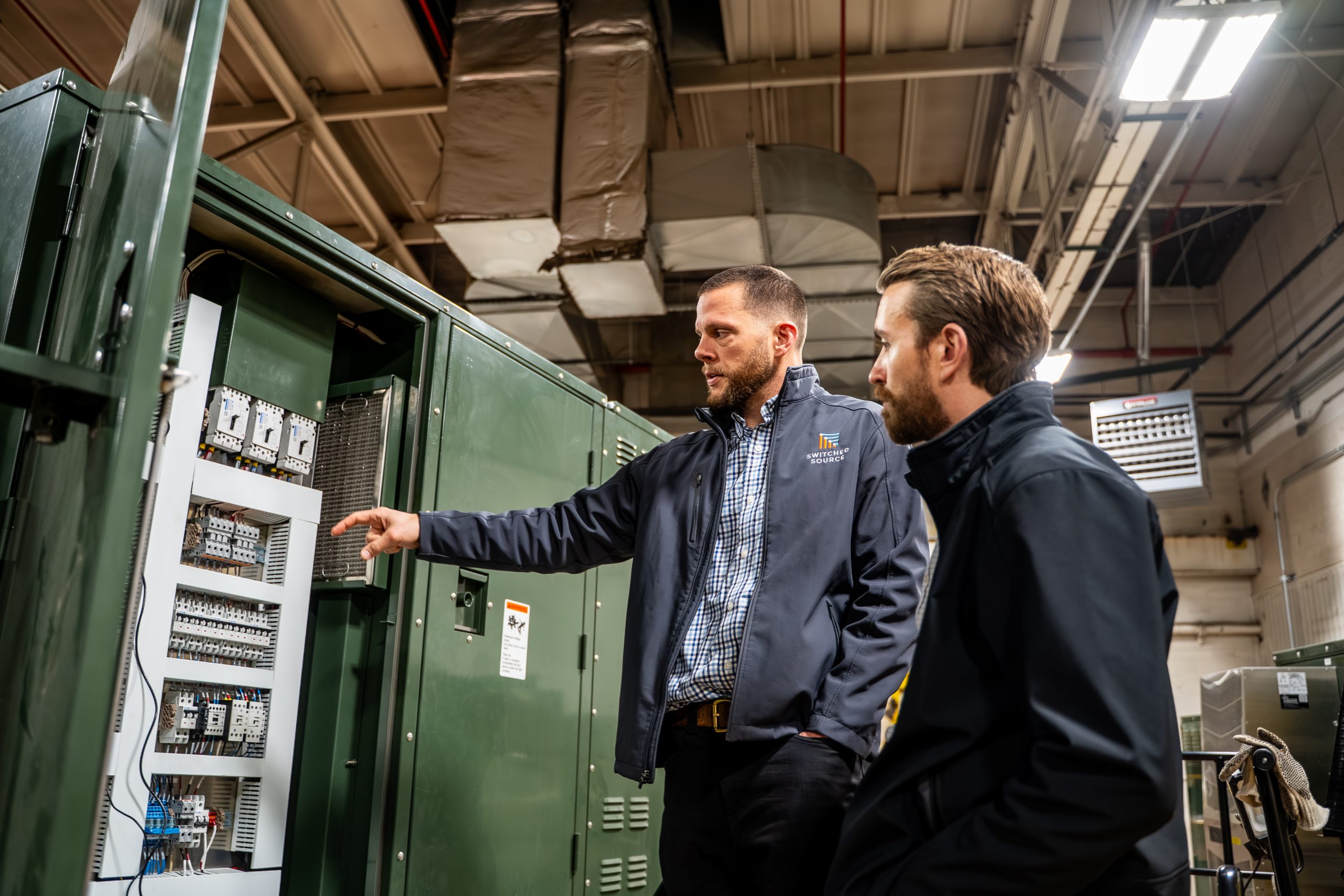
The Hockey Stick Moment
That persistence is paying off. Switched Source recently expanded into a 20,000-square-foot manufacturing facility in the Chicagoland area, increasing production capacity by 150 percent.
After years in pilot mode, the company now has more than 100,000 hours of field operation across utility territories from Alaska to Florida. Today, Switched Source has roughly $80 million in committed contract revenue, with 240 units expected to be deployed in the coming years.
“They’re no longer only in development,” Skinner says. “The technology is ready, and the market is responding.”
For Murray and Nelson, the Startup of the Year award offers a rare moment of reflection.
“Being recognized by MSU is a true badge of honor,” Nelson says. “The university has supported us from day one. Moving from a license agreement to hundreds of units in the field shows what’s possible when university research receives the runway it needs.”
“You rarely get the chance to pick your head up and realize how far you’ve come,” says Murray. “This award lets us pause, reflect—and then get back to work.”
###
Partner with MSU to Innovate In Power Solutions
The MSU Innovation Center is seeking companies and organizations interested in power electronics, electrical grid optimization, and energy infrastructure solutions.
Whether you’re exploring sponsored research, licensing opportunities, or co-developing real-time load balancing systems, utility-scale power electronics, or grid capacity enhancement innovations, we’re ready to collaborate.
Visit innovationcenter.msu.edu or contact us to start the conversation.
About the MSU Innovation Center
The MSU Innovation Center supports the commercialization of research, startup creation, and corporate partnerships at Michigan State University. Through technology transfer, venture creation, and industry engagement, the Innovation Center helps transform Spartan research and ideas into market-ready solutions that benefit society and strengthen Michigan’s economy. Learn more at innovationcenter.msu.edu. Learn more at innovationcenter.msu.edu