Research Archives - Page 24 of 37 - MSU Innovation Center

AgrAbility mechanical engineering capstone project designs portable swarm trap lifter for veteran beekeeper

MSU Extension

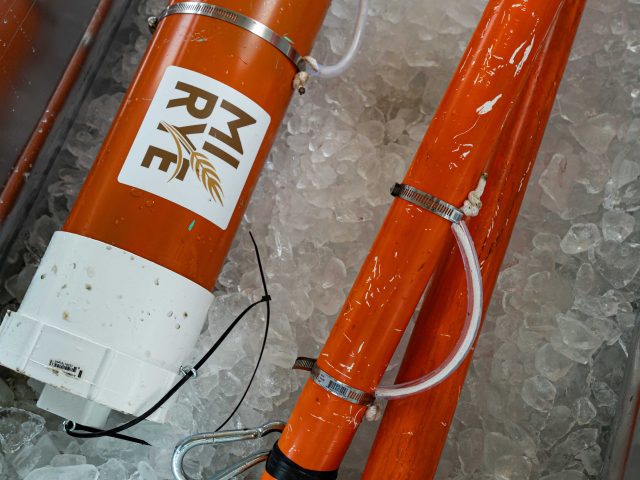
On April 19, 2024, members of the Mechanical Engineering Design capstone course at Michigan State University presented their design for a portable swarm trap lifter. The equipment was created for AgrAbility client and Heroes to Hives program instructor, Gary Brown, who has a back injury that limits his ability to climb a ladder or move heavy equipment. “We chose …


New research explores the root cause of pain relief

College of Osteopathic Medicine

In the first of a series of studies, Zach Waarala, a third-year medical student at the Michigan State University College of Osteopathic Medicine, decided to dive deeper into one of the first things he learned in medical school – that, despite positive results for patients, there is a lack of basic scientific evidence behind the …


Renaissance scientists in the Mendoza lab tackle climate change

Institute for Cyber-Enabled Research

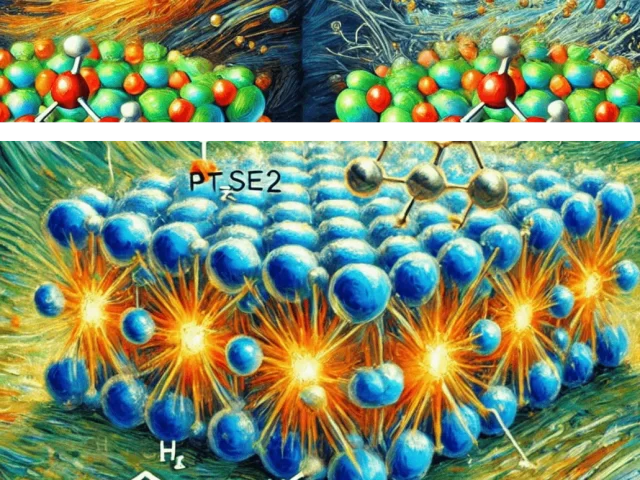
José Luis Mendoza Cortés is working to solve some of the most important questions facing our planet. As a faculty of the Department of Chemical Engineering and Materials Science and the Department of Physics and Astronomy, Mendoza uses the laws of nature to develop computational algorithms with machine learning and artificial intelligence focused on tackling climate …


A vaccine to fight antibiotic resistance

College of Natural Science

Driven by the overuse of antimicrobials, pathogens are quickly building up resistances to once-successful treatments. It’s estimated that antimicrobial-resistant infections killed more than 1 million people worldwide in 2019, according to the World Health Organization. “There are worries that at the rate things are going, in perhaps 20 or 30 years, few of our drugs will …


MSU researchers set new standards and show how a new treatment helps patients with MS, ALS, Parkinson’s disease

MSU Today

Is it possible for nanoparticles to go through the digestive system and deliver medicine directly to the brain tissue? Researchers from Michigan State University say yes, and their latest findings are expected to benefit patients with neurodegenerative disorders like multiple sclerosis, or MS; amyotrophic lateral sclerosis, or ALS; and Parkinson’s disease, or PD. “Our work …


New EPA PFAS ruling: MSU experts provide overview of changes

MSU Today

Municipal water systems must remove “forever chemicals” from their tap water under a new rule issued by the Environmental Protection Agency meant to prevent deaths and serious illnesses linked to the substances. This limit is the first of its kind for per- and polyfluoroalkyl substances known as PFAS, a toxic chemical used in everyday items …


SWRT: MSU Professor’s Innovative Technology Designed to Improve Crop Production with Less Water and Nutrients

East Lansing, MI — With climate change disrupting food availability and quality on the rise, a Michigan State University soil biophysics professor’s subsurface water retention technology—or SWRT—is poised to positively impact crops worldwide. Dr. Alvin Smucker of the Department of Plant, Soil, and Microbial Sciences developed the SWRT technology with his colleagues after six years …


Project GREEEN backs research into new way of breeding potatoes

MSU AgBioResearch

Roughly ten years ago, Dave Douches, a professor in Michigan State University’s Department of Plant, Soil and Microbial Sciences and director of MSU’s Potato Breeding and Genetics Program, led the Solanaceae Coordinated Agricultural Project (SolCAP). The project, funded by the U.S. Department of Agriculture’s National Institute of Food and Agriculture (USDA NIFA) to advance potato …


Collaboration Fuels High-Speed, Data-Intensive Research to Understand How Nuclei Decay

FRIB

A technical evaluation using data from a recent scientific-user experiment demonstrated how the U.S. Department of Energy’s (DOE) Energy Sciences Network (ESnet) enables Facility for Rare Isotope Beams (FRIB) scientists to send large amounts of data across the country, analyze it in near real-time, and return results, enabling quicker data-informed experimental choices. The high-speed network is …


Back To Top