News Archives - MSU Innovation Center

FRIB receives Genesis Mission award for AI-powered research

MSU Today

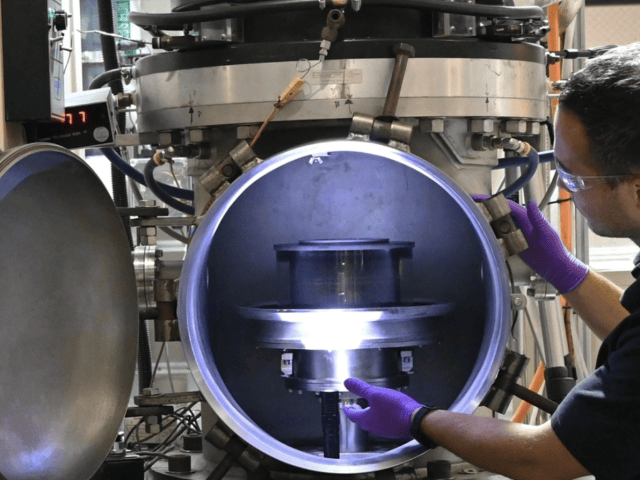
The Facility for Rare Isotope Beams, or FRIB, at Michigan State University, in collaboration with Argonne National Laboratory, was chosen to receive a Genesis Mission Phase I award from the U.S. Department of Energy. The project will develop artificial intelligence, or AI, tools — specifically, physics-informed “digital twins” — that could transform how heavy-ion accelerators and isotope separators are operated. The project, …


Neonatal Deaths Cut in Half in Flint Following Rx Kids Implementation

College of Human Medicine

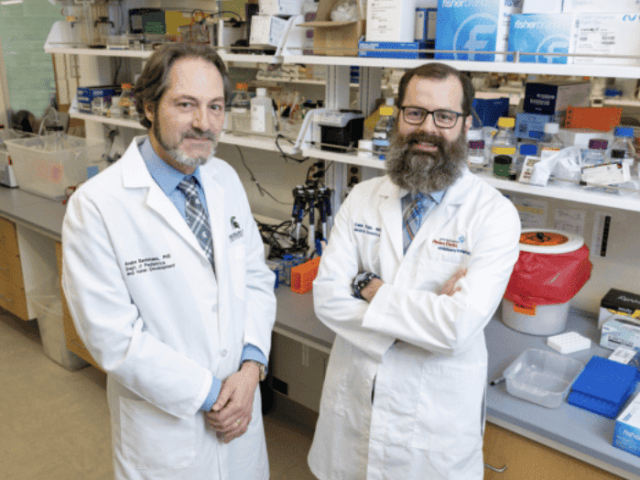
A new study has found that neonatal mortality—the death of an infant within the first 28 days of life—fell by nearly 50% in Flint following the launch of Rx Kids, the nation’s first community-wide maternal and infant cash prescription program. The decline represents a dramatic narrowing of a long-standing disparity between Flint and the rest of Michigan. Neonatal …


MSU AgBioResearch funds three projects to advance health, food systems and community well-being

AgBioResearch

EAST LANSING, Mich. — Michigan State University (MSU) AgBioResearch leaders have selected three projects to fund through the newly created Growing Healthy Together Initiative. The projects align with the initiative’s goal of bringing together MSU scientists and partners from across campus and beyond to solve complex health challenges through transdisciplinary research. Listed below are the titles and summaries …


New NSF grant supports home-grown quantum spin semiconductors

Department of Chemistry

The Kim Research Group has received a new $550,000 grant from the National Science Foundation to develop a home-built metal-organic chemical vapor deposition system (MOCVD) for growing quantum spin semiconductors. The latest award will support the lab’s ongoing work on layered hybrid perovskites, a class of semiconductors that combine organic and inorganic components into a thin, stacked …


Sensor for seniors: Fixing a hidden flaw in wearable technology

MSU Today

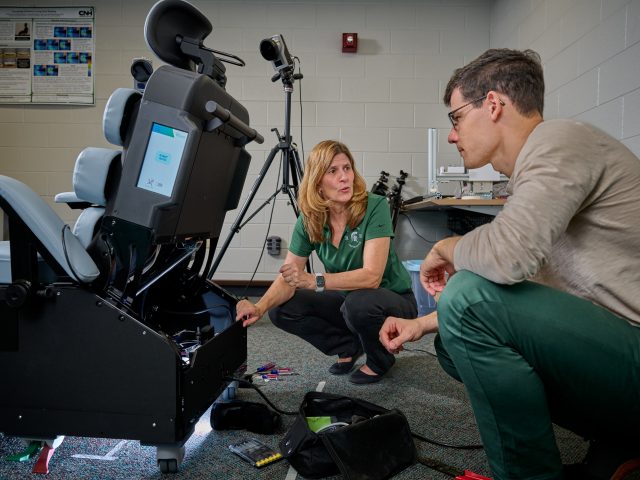
Skin-interfaced wearable health technology has a hidden flaw: Many systems work best on smoother skin, which tends to be on younger bodies — not the older adults who often need them most. This is because aging-related changes in skin, including wrinkles, thinning and dryness, can significantly impact the contact and data quality of wearable devices. …


Research, outreach and innovation help Michigan’s pork industry stay competitive

MSU Today

Research from Michigan State University is helping shape the future of Michigan’s pork industry, beginning with how pigs are housed. Recent changes to Michigan law require farms to house pregnant sows in ways that allow them to move freely and avoid confinement, increasing the use of group housing systems. Because pigs can be territorial, however, …


MSU scientists uncover how ovarian cancer resists chemotherapy — and how to reverse it

College of Human Medicine

Michigan State University researchers have identified how ovarian cancer cells become resistant to chemotherapy and discovered a protein, that, when blocked, can restore the drug’s effectiveness. The findings, published in Cell Reports, center on cisplatin, a widely used chemotherapy drug first discovered at MSU in 1965 and still considered among the gold standard for treating …


New discovery reshapes understanding of liver repair

MSU Today

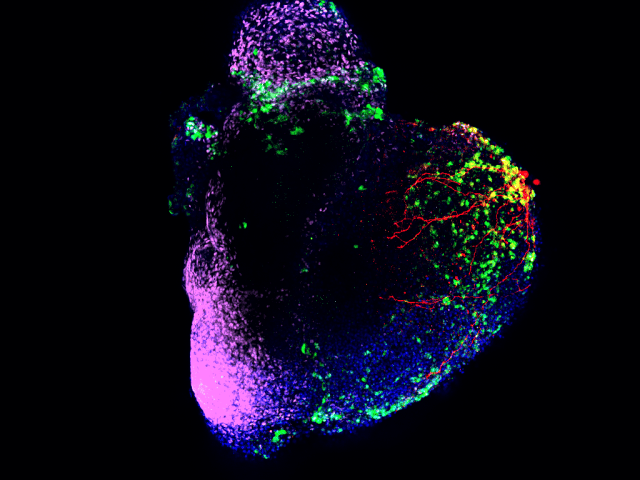
The liver is one of the few organs capable of regenerating after surgery — a remarkable ability that makes life-saving procedures possible for thousands of patients each year. But not every liver regenerates as expected. Some patients develop post-hepatectomy liver failure, a serious complication that remains a leading cause of death after liver surgery. Now, …


Research Spotlight: New fibers bring sunlight deeper, helping algae grow 6X faster

College of Engineering

For decades, algae have been seen as a promising source of sustainable food, animal feed, biofuels and carbon-neutral materials. Compared with traditional crops and livestock, algae grow faster, require less land and freshwater and can directly convert sunlight and carbon dioxide into useful products. However, a major challenge has limited the widespread adoption of algae …


Solving the protein puzzle behind our allergy miseries

For the one in three Americans with allergies, being proactive is the name of the game. Extra caution when trying a new dish, avoiding certain furry friends, and popping Zyrtec or Allegra each spring when the world is cloaked in pollen. Ask biochemist Maksymilian Chruszcz about allergies, though, and he’ll tell you this — we can do …


Back To Top